Wissenszentrum

Leitfäden für jede unserer Behandlungen.

SMP, Narbenkaschierung und Haartransplantation, jeweils mit eigener Bibliothek. Von Behandlern geschrieben, nicht von Marketern.

0

Artikel

0

Themen

Arten von Haarausfall · Typen und Behandlungen

Ihr Leitfaden zu Haarausfall.

Haarausfall ist nicht gleich Haarausfall. Die Art bestimmt die Behandlung — und ob SMP überhaupt sinnvoll ist. Hier sind die acht Arten, die wir am häufigsten sehen, einfach erklärt.

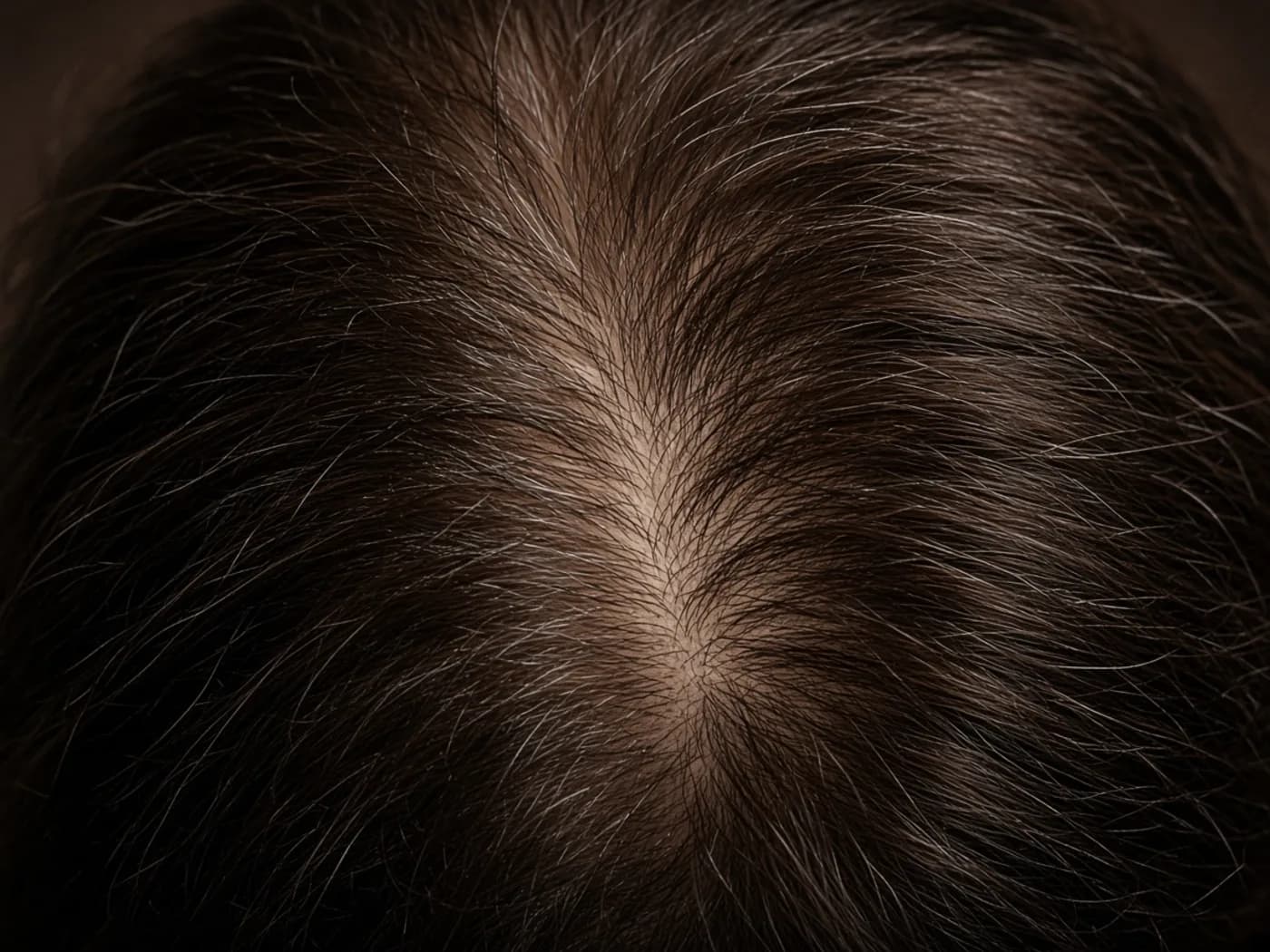
Top-down close-up of dark hair with a widening centre part — an overview of the different types of hair loss

Typen und Behandlungen

Ihr Leitfaden zu Haarausfall

Haarausfall ist ein Oberbegriff. Manche Arten sind erblich und schleichend, manche autoimmun, manche vorübergehender Ausfall — und manchmal sind es einfach abgebrochene Haare. Zu wissen, welche Art Sie haben, ist der erste Schritt zur richtigen Behandlung.

Beginnen Sie mit einer Diagnose. Hausarzt oder Dermatologe können die Art bestätigen, Blutwerte prüfen und medizinische Ursachen ausschließen, bevor etwas Kosmetisches geplant wird.

Die acht Arten

Wo VANC ins Spiel kommt

Im kostenlosen Erstgespräch sehen wir uns Ihre Kopfhaut, Ihre Vorgeschichte und Ihre Fotos an und sagen Ihnen ehrlich, um welche Art es sich wahrscheinlich handelt — und ob SMP der richtige nächste Schritt ist.

Ihre Art im kostenlosen Erstgespräch klären

Informationsinhalt, keine medizinische Beratung. Kreisrunder, vernarbender, schmerzhafter oder plötzlicher Haarausfall gehört zuerst zum Hausarzt oder Dermatologen.

Welche Arten von Haarausfall gibt es?

Die häufigsten Arten sind erblicher Haarausfall bei Männern und Frauen, telogenes Effluvium (vorübergehender Ausfall), Alopecia areata und vernarbende Alopezie (autoimmun), Traktionsalopezie (Zug), Haarausfall durch Chemotherapie, Trichotillomanie (Haareausreißen) und Bruch des Haarschafts. Jede Art hat eine andere Ursache und Behandlung.

Bei welchen Arten von Haarausfall kann SMP helfen?

SMP wirkt am besten bei stabilem erblichem Haarausfall, lang bestehender Alopecia areata, vernarbender Alopezie, die seit mindestens einem Jahr inaktiv ist, dauerhaftem Traktionsverlust und Narben. Nicht geeignet ist sie während akuten Ausfalls, aktiver Autoimmunschübe, einer Krebsbehandlung oder bei reinem Haarbruch.

Wächst mein Haar wieder nach?

Das hängt von der Art ab. Telogenes Effluvium, frühe Traktionsalopezie und Haarausfall durch Chemotherapie wachsen meist nach, sobald der Auslöser wegfällt. Erblicher Haarausfall lässt sich mit Behandlung bremsen, während durch vernarbende Alopezie verlorene Follikel nicht zurückkehren. Hausarzt oder Dermatologe können bestätigen, was für Sie gilt.

Haaransätze

Hairline Design: The Single Most Important Decision

7 Min. LesedauerMay 2026
Hairline Design: The Single Most Important Decision

A great hairline is a balance of geometry and irregularity. What a good designer measures — frontal point, temple angles, density gradient.

The Single Most Important Decision

Everything else in a hair transplant — graft count, technique, surgeon hands — can be world-class, and the result will still look fake if the hairline is wrong. The hairline is the part of the result the world sees first and forever.

The Anchor Points

A great hairline design measures and respects three anchor points:

  • The mid-frontal point — typically 7–10 cm above the glabella (the smooth space between the eyebrows), placed too low looks comical at 50
  • The frontotemporal angle — where the hairline meets the temple recession, usually a soft 30–45° wedge
  • The temporal peak — the point where the natural temple density returns
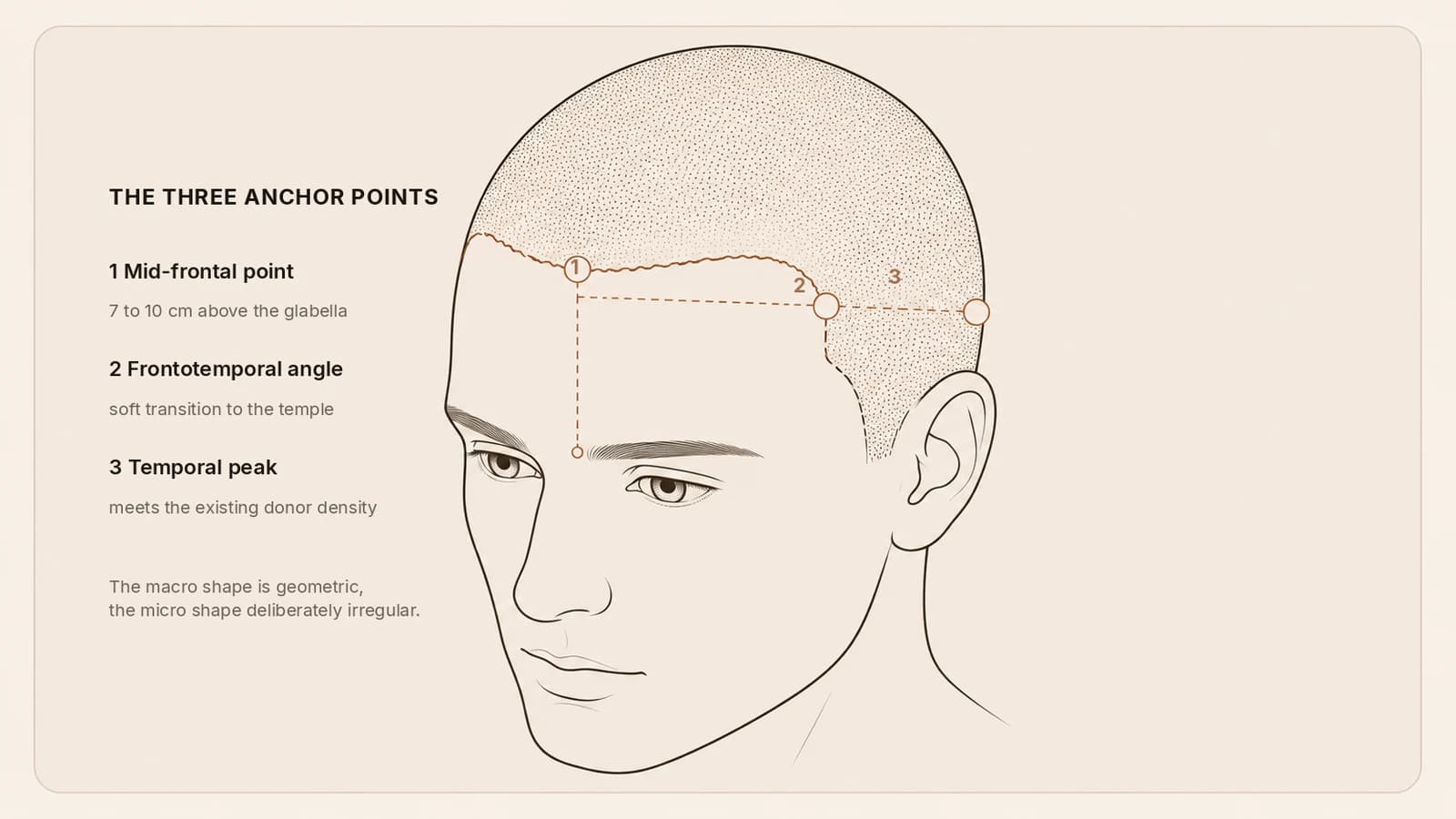
The three anchor points of a natural hairline design

Every good hairline starts at these three points. A ruler-straight line does not exist in nature.

Geometry vs. Irregularity

A hairline that is perfectly straight looks fake. A natural hairline has micro-irregularities: stray hairs that sit forward of the line, slight dips and rises, single-hair fronds that fade into the surrounding skin. A skilled designer plans the macro-line geometrically and the micro-line with deliberate, irregular randomness.

Density Gradient

The first row of a natural hairline is single-hair grafts. The second row is single + occasional two-hair. From row three onward, two- and three-hair grafts add density. Putting three-hair grafts at the front line is the single biggest mistake in cheap hair transplants — it looks like a doll’s hair.

Age-Appropriate Design

A 25-year-old wants the hairline he had at 18. We refuse it. Designed too low and too dense, that line ages badly: by the time the rest of the hair has receded behind it, the result looks like a wig. A great designer plans the hairline that will still look natural at 60.