
Most important highlight
Hairlines decide everything.
Graft count, technique, surgical hands, none of it matters if the hairline is wrong. Whether you are restoring with a transplant, framing with SMP, or repairing a previous procedure, the front line is where natural-looking results are won or lost.
Why this matters
The single most visible feature of a great result.
A hairline is the part of any hair-restoration result the world sees first and forever. From a distance, density is what the eye notices. Up close, at conversational range, in photographs, in selfies, it is the front line that announces whether a procedure was done at all.
Every clinic claims to design natural-looking hairlines. The honest truth is that most produce identifiable patterns: too straight, too low, too dense, wrong angle, multi-hair grafts at the front edge. The patient looks "okay" from one specific angle and obvious from any other.
At VANC the hairline is the part of the case we spend the most time on at intake. Geometry, irregularity, density gradient, age-appropriate placement, ethnic and facial proportions, projected long-term loss, all are accounted for before any graft is placed.
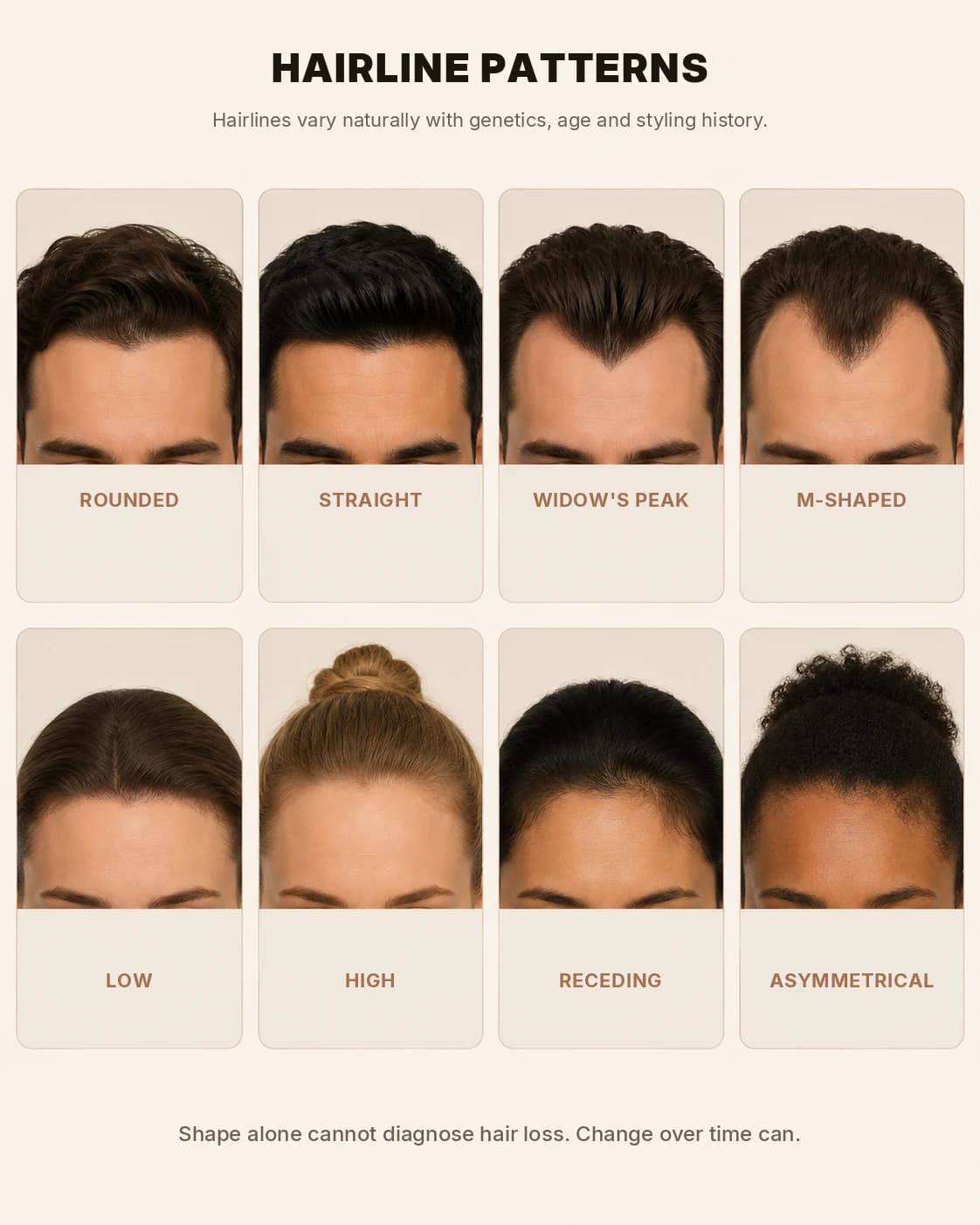
Four ways we work on hairlines
Design, restore, frame, repair.
Our process
Four steps. None skipped.
Whether the work is surgical, SMP-only, or repair, the design phase follows the same disciplined process.
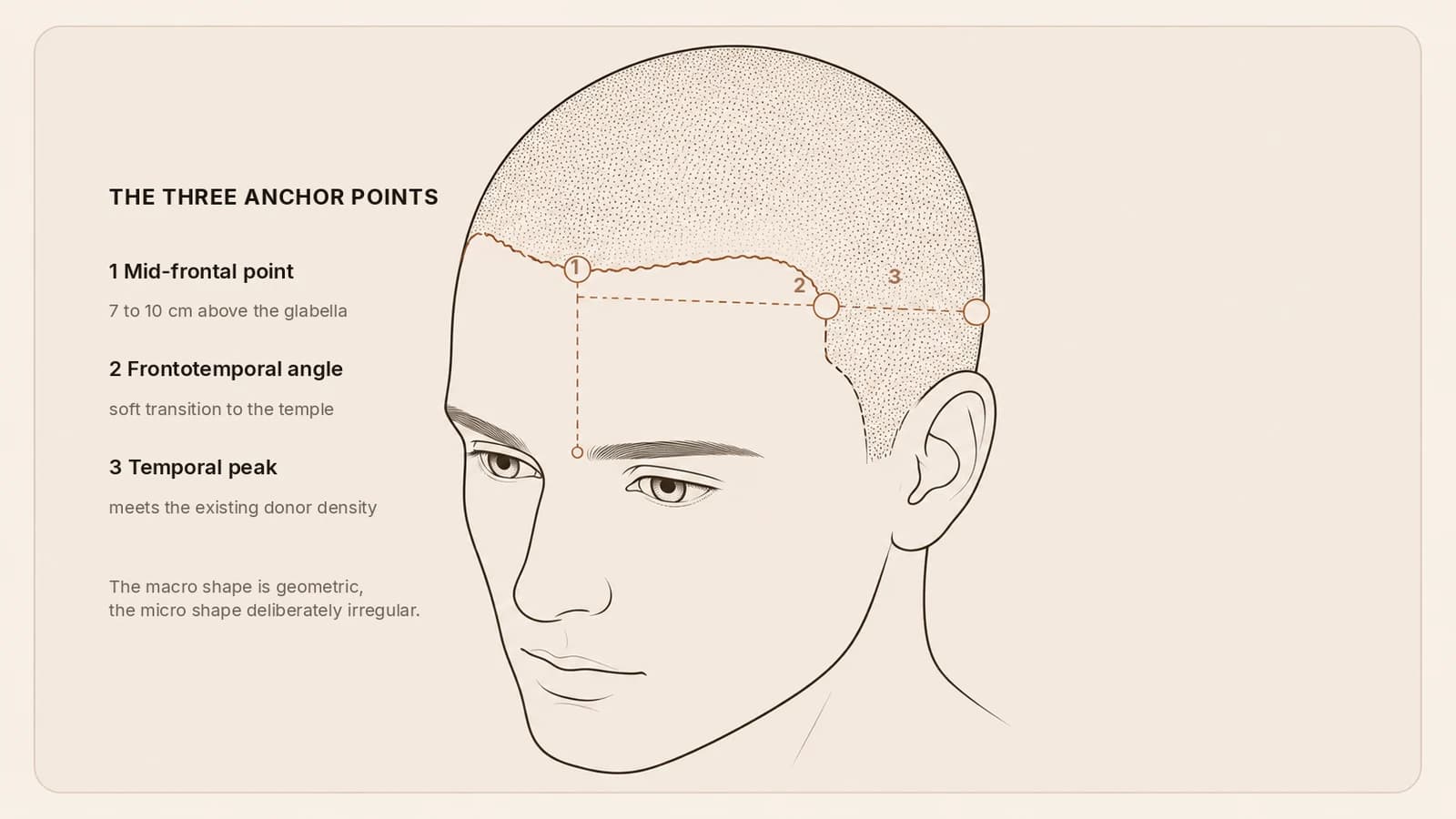
Mark the three anchor points
The mid-frontal point sits at an age-appropriate height above the glabella. The frontotemporal angle softens into a wedge. The temporal peak meets the existing donor density.
Sketch in marker, view in the mirror
The proposed hairline is drawn directly on your scalp in non-permanent marker. You see it from front, three-quarter, profile and top-down, and you sign it off before any graft moves.
Plan the density gradient
Single-hair grafts in the first 1 to 2 rows. Single + occasional 2-hair in the third row. Multi-hair grafts behind. The exact graft inventory is counted and locked in before surgery day.
Execute, photograph, follow up
Standardised photographs at intake, post-op, month 4, month 8 and month 12. The final hairline is judged at month 14; earlier assessments are unreliable.
Knowledge
Everything we know about hairlines.
Eleven deep articles covering design, restoration, SMP, ethnic considerations, female hairline lowering, and repair work.


Start with your hairline.
The intake is free. The design is in marker on your scalp. The decision is yours, after seeing it from every angle.