
Scalp Micro Pigmentation
Density Enhancement
Restore the visual impression of a full head of hair without surgery. Permanent. Natural. Visible from session one.
Sessions
2–3 sessions
Session length
2–4 hours
Spacing
7–10 days apart
Downtime
None
Final result
4–6 weeks
Maintenance
4–6 years
SMP density enhancement deposits thousands of medical-grade micro-dots into the dermal layer of the scalp — each one mimicking a real hair follicle. The visual effect is more density: a fuller-looking crown, a denser hairline, a thicker mid-scalp.
Unlike a transplant, density SMP does not depend on donor capacity, healing time or biological growth. The dots are visible from the first session and the final result is locked in within four to six weeks.
How Density SMP Works
A trained practitioner places thousands of pinpoint dots between your existing hairs. Each dot replicates the visual signature of a follicle: tiny, dark, irregular. The eye reads the combined pattern as denser hair.
The technique is precise. Dot size, depth, spacing and angle are calibrated to match your existing follicles so the new pattern is indistinguishable from your natural density.
Why It Works for Thinning Scalps
Thinning produces visible scalp between hairs. The eye sees the contrast between dark hair and light skin, and reads it as "thin." SMP changes the colour of the visible scalp to match the surrounding hair shadow — closing the contrast gap and restoring the visual impression of density.
When SMP Density Is the Right Choice
- Crown thinning where a transplant would over-spend donor capacity
- Hairline density loss without significant recession
- Mid-scalp diffuse thinning
- Combined plans where SMP fills between transplanted grafts
- Preserving donor budget for a future procedure
The Three Sessions
Session 1 (2–4 hours) — foundation layer. The practitioner maps the area, custom-mixes the pigment for your skin and hair colour, and lays down the base density at conservative spacing.
Session 2 (2–3 hours) — density build. About 7–10 days later, density is increased and any areas that lightened during healing are reinforced. Final pigment intensity is matched to your skin under standardised lighting.
Session 3 (1–2 hours, optional) — refinement. Final adjustments to density, hairline softness and colour balance.
How Long It Lasts
SMP is permanent — the pigment is in the dermis. What changes over time is intensity. Most clients book a refresh between years 4 and 7 to bring density back. A refresh is a single session at 25–35% of the original price.
Suitability
Is this the right procedure for you?
Best for
- Norwood II–IV with diffuse thinning
- Crown thinning where transplant is not the right answer
- Density loss in mid-scalp or hairline zones
- Patients seeking permanent results without surgery
- Combined plans alongside an existing or future transplant
Not the right fit when
- Active alopecia or scarring alopecia until stable
- Unrealistic expectations of "growing real hair"
- Active scalp infection or severe psoriasis
The package
What is included
The figure you sign at intake covers everything below. No itemised invoices, no surprise add-ons.
Hair loss · Before the bloods
5 blood tests worth considering when your hair is thinning.
Before density SMP or a transplant, we want to know why the hair is going. Look past the shampoo aisle: read the pattern first, then test what the history points to.
Before the bloods
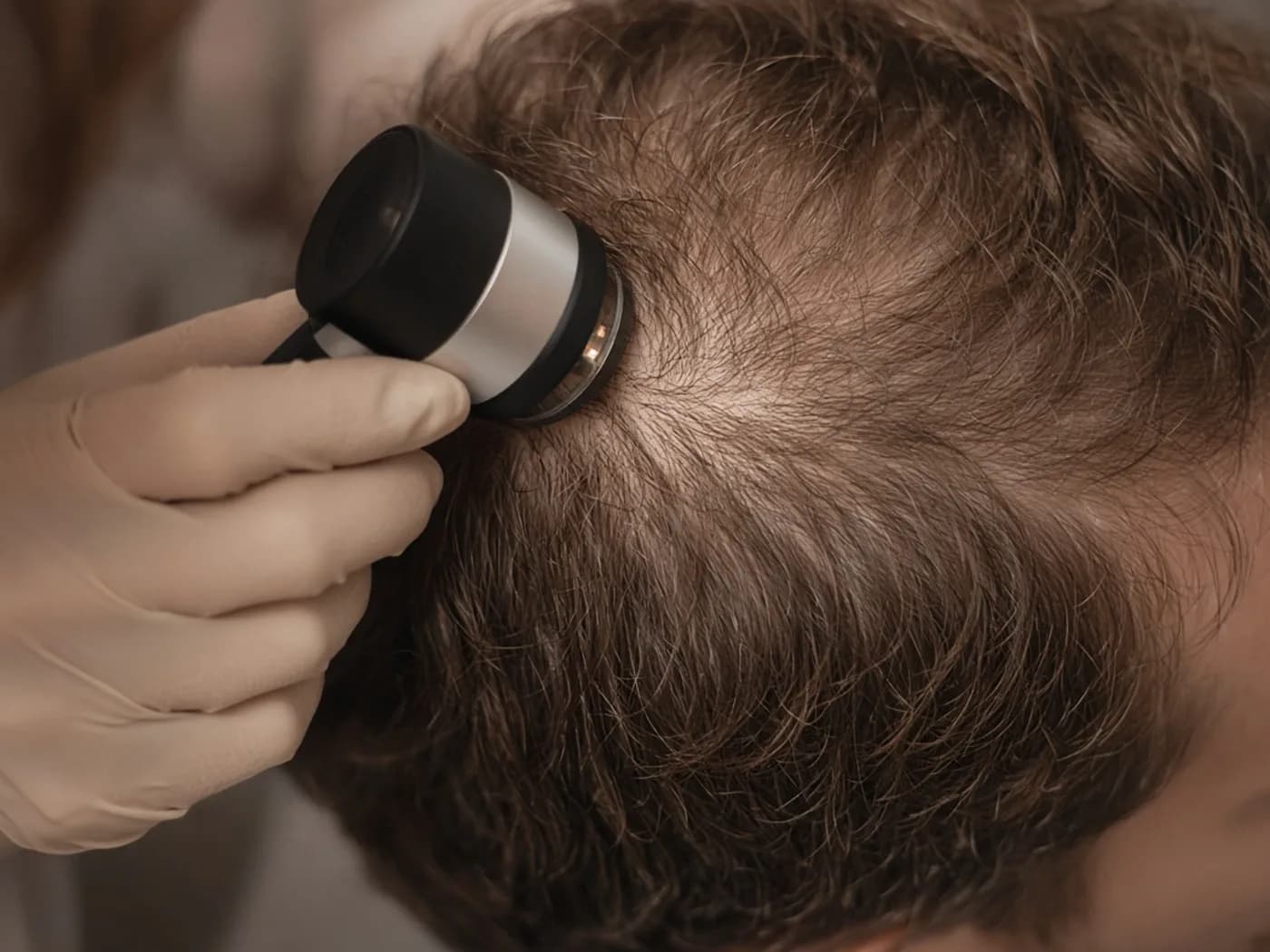
First: what kind of hair loss is this?
Diffuse shedding, patterned thinning and patchy loss have different causes. Blood tests help most in diffuse shedding; patterned thinning is usually diagnosed by examination alone.
Diffuse shedding
More hair in the shower, all over.
Think telogen effluvium and systemic triggers.
Patterned thinning
Crown, temples, a widening part.
Think androgenetic alopecia — usually diagnosed by examination alone.
Patchy loss
Distinct bald patches.
A different conversation — often alopecia areata.
See a doctor or dermatologist first if there isScarring or shiny skin · a sore, inflamed scalp · rapidly spreading patches · eyebrow or body hair loss · feeling unwell.
The blood test should follow the pattern, not replace it.
Educational content, not medical advice. Sudden, patchy, scarring or persistent hair loss deserves a proper medical or dermatology assessment.
Which blood tests are useful for thinning hair?
It depends on the pattern. For diffuse shedding, a full blood count with ferritin and a thyroid test (TSH, sometimes free T4) are the most commonly considered. Vitamin B12, vitamin D, zinc and hormone tests are added only when your diet, medication, symptoms or history point there.
Should I take iron, biotin or zinc supplements for hair loss?
Not blindly. Supplements help when a test shows a real deficiency. Without one, extra iron, zinc or vitamin D rarely grows more hair, and some — like high-dose zinc or biotin — can cause side effects or distort lab results.
Do I need blood tests before SMP or a hair transplant?
Density SMP doesn’t require routine bloodwork. But if your shedding is diffuse or sudden, we ask you to have it checked by your GP or dermatologist first, because planning density on an active shed gives a misleading result. Before a transplant, standard pre-operative bloods are part of the medical work-up.
Frequently asked
Honest answers
Will my scalp look like a tattoo?
No. Each dot is sized to match a real follicle (0.5–1.2 mm) and placed at irregular spacing. At conversational distance the result looks like denser hair — not pigment.
Can I shave my head after density SMP?
You can shave or cut your hair to any length. The dots remain visible at any haircut. In fact, density SMP is often combined with a shaved-look approach for clients who prefer a clean, even appearance.
Will the dots fade or turn blue?
High-quality SMP pigments are carbon-based and engineered to fade through neutral grey to translucent — never through blue or green. The "blue scalp" you may have seen on bad cases is the result of cheap iron-oxide tattoo inks.
How does it feel during the session?
Most clients describe it as a 2–3 out of 10 — closer to a light scratching sensation than tattoo pain. We use topical numbing throughout. You can listen to music, watch a film, or doze.
Continue reading
Related guides


Start with a free intake.
No cost. No obligation. We will tell you honestly if surgery is the right fit, or if a non-surgical plan would serve you better.