Why SMP Fades and What You Can Do About It

SMP is permanent, but pigment evolves. UV, immune response, and skin turnover all play a role. Here is what 4–6 years really looks like.
SMP Is Permanent — But Not Frozen
The pigment is in the dermis and does not wash off. What changes over time is its visual intensity. Three forces act on every dot from the day it is placed:
- UV radiation breaks down pigment molecules (slow)
- Skin cell turnover gradually pushes superficial pigment up and out (slow)
- Macrophages — immune cells that engulf foreign particles — slowly remove a fraction of the pigment over years (the slowest)
The Realistic Fade Timeline
Across thousands of clients, a typical fade looks like:
- Year 1: pigment matures and softens by 10–20% as crusts shed (this is normal and planned)
- Years 2–3: minimal visible change
- Years 4–5: gentle lightening, mainly on the most sun-exposed areas (front and crown)
- Years 5–7: some clients book a refresh; many do not
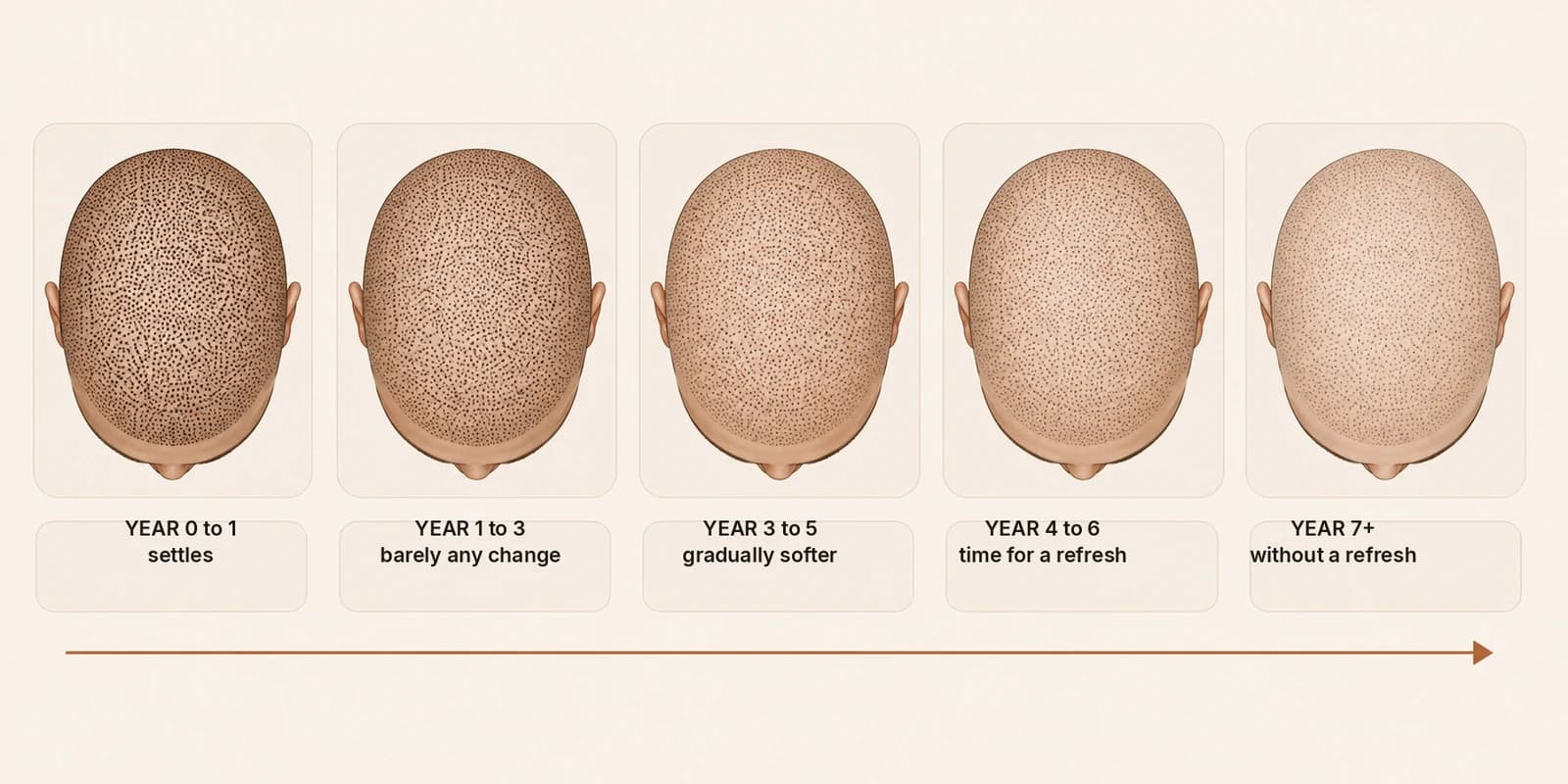
The pigment fades evenly, never patchily. Most clients refresh between year four and six.
How to Slow the Fade
UV is the dominant factor. Three habits keep your SMP looking fresher for longer:
- SPF 30+ on the scalp every day there is sun on the skin — even in winter at altitude
- A wide-brim or cap on long outdoor days
- Moisturise the scalp regularly — dry skin sheds faster, taking superficial pigment with it
The Refresh Session
A refresh is a single 1–2 hour session that re-strengthens the existing pattern. We do not redesign the hairline — we add density back to the dots that have softened. Most refreshes happen between years 4 and 7, and cost roughly 25–35% of the original full-scalp price.