
Scalp Micro Pigmentation
Scar Camouflage
FUT strip scars, FUE dot scars, burn scars, surgical scars — precision pigment work that makes them disappear at any short haircut.
Sessions
2–3 sessions
Session length
60–120 min
Spacing
3–4 weeks apart
Downtime
None
Final result
6–8 weeks
Min. scar age
12 months
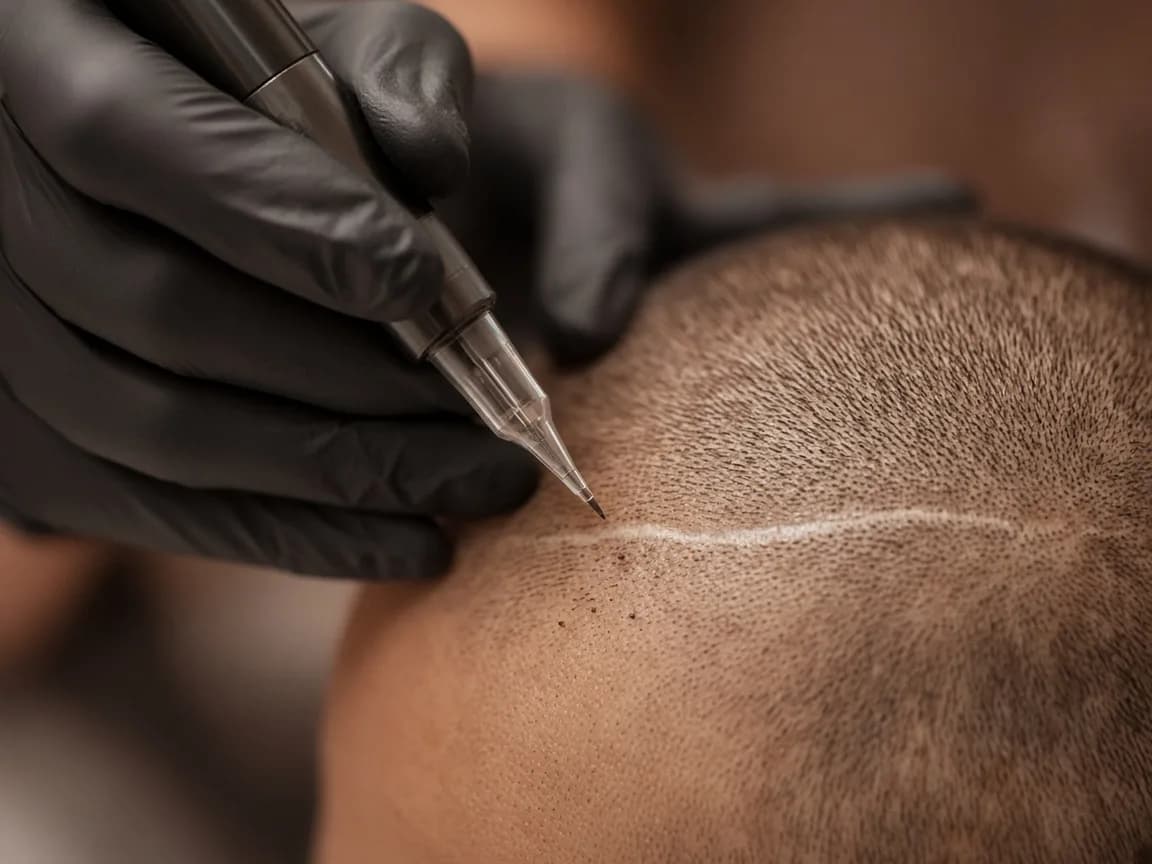
A scar is a region where the skin healed without follicles. No follicles means no shadow, no colour break, no texture variation — just a flat patch that catches light differently from the surrounding scalp. SMP puts the missing visual signal back: thousands of dots that mimic the shadow of follicles, blending the scar into the surrounding scalp at typical hair lengths.
We treat strip-method (FUT) linear scars, FUE dot scars, burn scars, surgical scars, and trauma scars. The result is dramatic visual reduction — sometimes complete invisibility at typical haircut lengths.
Scar Types We Treat
- FUT (strip) scars — linear, occipital, often 12–18 cm long
- FUE dot scars — thousands of 0.7–1.0 mm dots, visible when shaved short
- Burn scars — usually thicker tissue with unpredictable pigment uptake
- Surgical and trauma scars — neurosurgery, head injury, accidents
- Camouflage of poor older transplants ("doll's hair" patterns)
How Scar Tissue Behaves Differently
Scar tissue does not absorb pigment the same way healthy skin does. A first session in scar tissue may take only 30–50% of the pigment a normal session would. That is expected. We layer the pigment over 2–3 sessions, allowing each to settle, then assess what was retained and add what is needed.
The realistic expectation is dramatic improvement, not perfection. A bright pink linear scar after a haircut becomes invisible at 6 mm hair length. A heavily textured burn scar becomes far less obvious but may still show texture under direct lighting.
When a Scar Is Suitable
- At least 12 months old (fully matured)
- Stable colour (no longer pink/red)
- Flat or only mildly raised texture
- No active infection or inflammation
- Realistic expectations — reduction, not erasure
The Treatment Plan
Three short sessions spaced 3–4 weeks apart (longer than standard SMP to allow the scar tissue to settle). Total session time: 60–120 minutes. Final assessment 6 weeks after the last session, at which point the scar is invisible at any conventional haircut length.
Suitability
Is this the right procedure for you?
Best for
- FUT linear donor scars
- Visible FUE dot patterns after shaving
- Cosmetic & surgical scars on the scalp
- Older transplant repair (covering visible grafts)
Not the right fit when
- Scars less than 12 months old
- Keloid or hypertrophic scars without preliminary assessment
- Active inflammation in the scar region
The package
What is included
The figure you sign at intake covers everything below. No itemised invoices, no surprise add-ons.
Scar camouflage · sun & tanning
What happens to scar camouflage when you get a tan?
One of the most common questions we hear. A shaved scalp sees more sun than almost any other skin, so the plan has to hold up in July, not just on the day you leave the studio.
01 · The concern
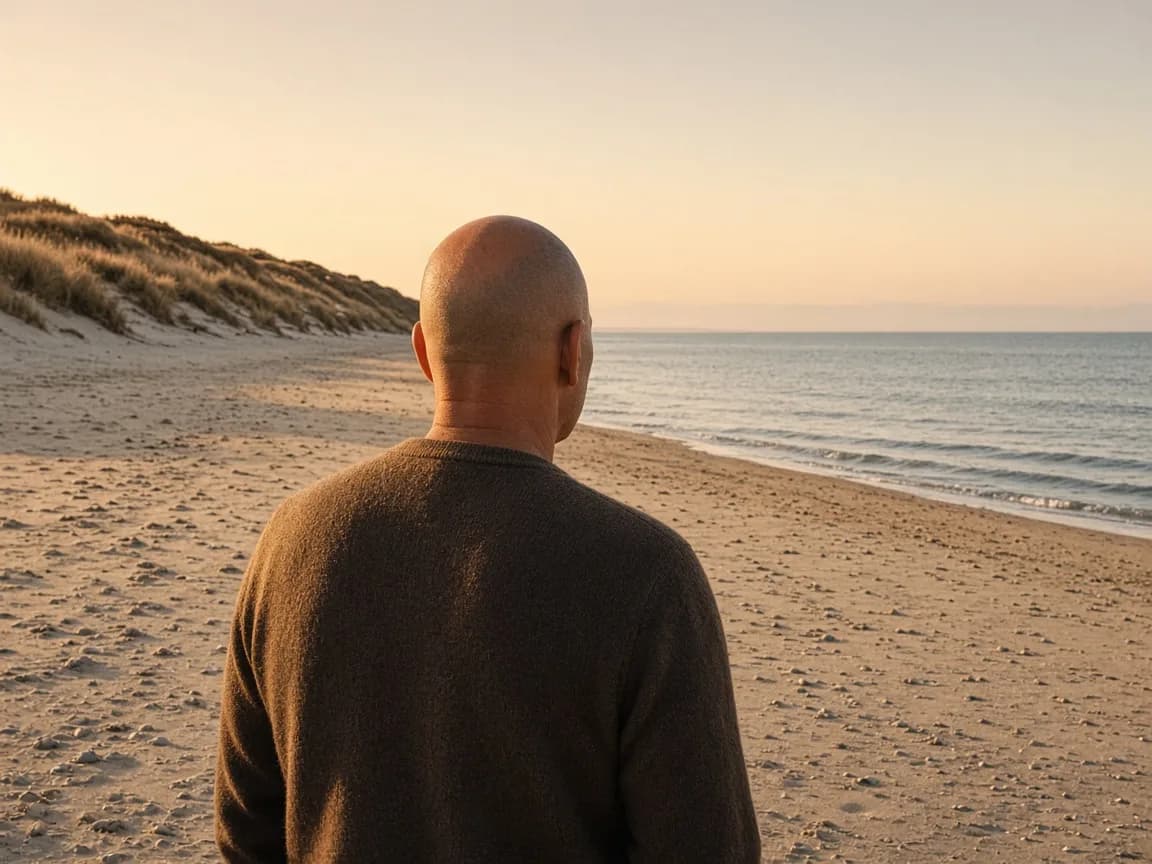
Summer is the real test of scar camouflage
Belgian and Dutch summers, beach holidays, cycling, padel on an open court: a shaved or buzzed scalp takes direct sun for months. Clients reasonably ask whether their camouflage will still look natural once the skin around it darkens.
- The scalp, especially the crown and the back of the head, is one of the most sun-exposed areas of the body
- Camouflage has to be judged healed and in summer light, not only right after a session
- A good plan accounts for how your skin tans before the first dot goes in
We don't design for how it looks today. We design for how it looks healed, tanned and years later.
Will my scar camouflage change colour when I tan?
The pigment itself does not tan, but when it is placed at the right depth and saturation it keeps reading as follicles rather than as a patch. Sun exposure mainly softens pigment slowly over years, which SPF and an occasional top-up manage.
Why does my scalp scar look worse in summer?
Scar tissue often doesn't tan and has no follicles, so as the scalp around it darkens the pale line becomes more contrasted. SMP adds the missing follicle shadow so the scar blends into the surrounding scalp.
Can I go in the sun after scalp scar camouflage?
Avoid direct sun on the treated area while it heals after each session. After that you can enjoy the sun normally. Use SPF 30+ on the scalp and a hat on long days outdoors to keep the result looking fresh for longer.
Frequently asked
Honest answers
Can SMP make my scar completely invisible?
It depends on the scar. A flat, pale linear FUT scar can become essentially invisible at 6 mm haircut and shorter. A heavily textured burn scar will become far less obvious but may still show texture under direct lighting. We tell you what to expect at the in-person assessment, with photographs, before any session is scheduled.
Why does scar work need three sessions?
Scar tissue absorbs pigment unpredictably — often 30–50% of what healthy skin retains in a first pass. Layered sessions allow us to see what was retained and reinforce only the spots that need it. Trying to do it all in one session would over-pigment some areas and under-pigment others.
Will I need a refresh later?
Like all SMP, scar camouflage softens over years. Most clients return for a small refresh between years 5 and 8. Refresh sessions for scar work are short (30–60 min) and inexpensive.
Continue reading
Related guides


Start with a free intake.
No cost. No obligation. We will tell you honestly if surgery is the right fit, or if a non-surgical plan would serve you better.