We openen in oktober, plan je gratis intake in
Kenniscentrum

Expertkennis over micro haarpigmentatie.

Alles wat je moet weten over micro haarpigmentatie (SMP), haarverlies, littekencamouflage en nazorg, geschreven door specialisten, niet door marketeers.

0

Artikelen

0

Onderwerpen

Littekencamouflage · zon & bruinen

Wat gebeurt er met littekencamouflage als je bruin wordt?

Een van de vragen die we het vaakst horen. Een geschoren hoofdhuid krijgt meer zon dan bijna elke andere huid, dus het plan moet in juli overeind blijven, niet alleen op de dag dat je de studio verlaat.

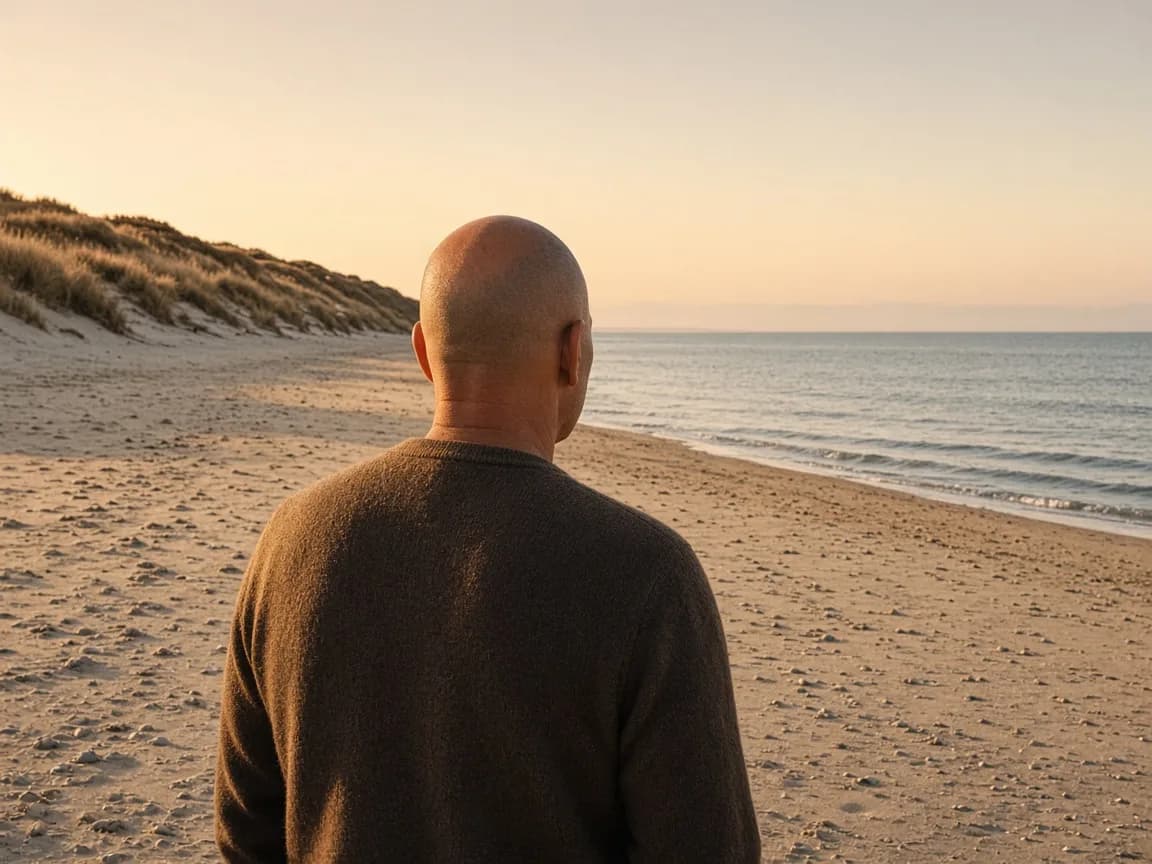
Man with a shaved head on a Belgian beach in summer sun — sun exposure after scalp scar camouflage

01 · De zorg

De zomer is de echte test voor littekencamouflage

Belgische en Nederlandse zomers, strandvakanties, fietsen, padel op een open baan: een geschoren of kortgeknipte hoofdhuid krijgt maandenlang directe zon. Klanten vragen zich terecht af of hun camouflage nog natuurlijk oogt als de huid eromheen donkerder wordt.

  • De hoofdhuid, vooral kruin en achterhoofd, is een van de meest zonblootgestelde zones van het lichaam
  • Camouflage beoordeel je genezen en in zomerlicht, niet alleen direct na een sessie
  • Een goed plan houdt rekening met hoe jouw huid bruint, nog vóór de eerste dot

We ontwerpen niet voor hoe het er vandaag uitziet. We ontwerpen voor hoe het eruitziet na genezing, gebruind en jaren later.

Verandert mijn littekencamouflage van kleur als ik bruin word?

Het pigment zelf bruint niet, maar op de juiste diepte en verzadiging blijft het lezen als follikels in plaats van als een vlek. Zon laat pigment vooral heel langzaam zachter worden over de jaren, wat je opvangt met SPF en af en toe een opfrissing.

Waarom ziet mijn litteken op de hoofdhuid er in de zomer slechter uit?

Littekenweefsel bruint vaak niet en heeft geen follikels. Terwijl de hoofdhuid eromheen donkerder wordt, neemt het contrast met de lichte lijn toe. SMP voegt de ontbrekende follikelschaduw toe, zodat het litteken opgaat in de hoofdhuid.

Mag ik in de zon na littekencamouflage op de hoofdhuid?

Vermijd directe zon op de behandelde zone terwijl die na elke sessie geneest. Daarna geniet je gewoon van de zon. Gebruik SPF 30+ op de hoofdhuid en een hoed bij lange dagen buiten, dan blijft het resultaat langer fris.

Littekencamouflage

Scar Camouflage: How SMP Makes Scars Invisible
5 min leestijdFeb 2026
Scar Camouflage: How SMP Makes Scars Invisible

FUT strips, FUE dots, burns, or surgical scars — a deep look at how precision pigment work restores a natural scalp appearance.

Why Scars Stay Visible

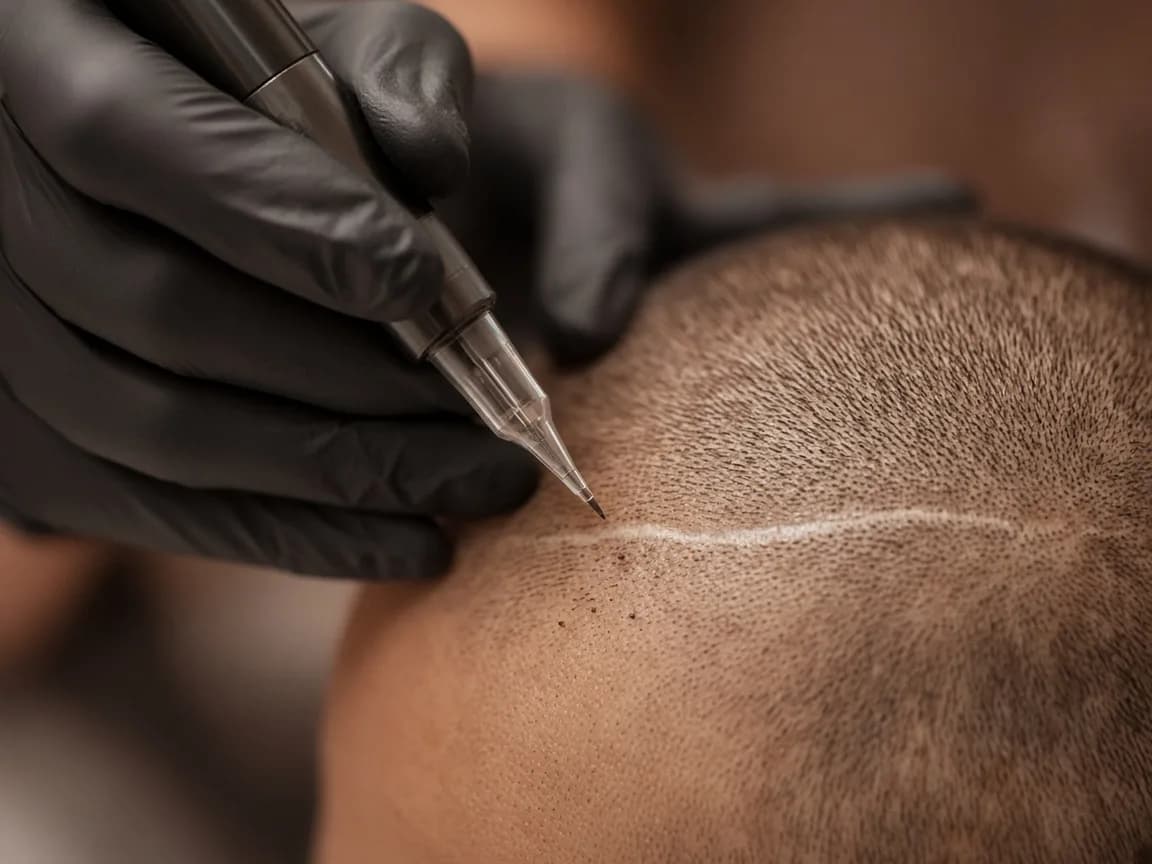
A scar is a region where the skin healed without follicles. No follicles means no shadow, no colour break, no texture variation — just a flat patch that catches light differently from the surrounding scalp. That is why scars become more visible the shorter you cut your hair, even decades after they form.

SMP works because it puts the missing visual signal back: thousands of micro-dots that mimic the shadow of follicles in the scar area, blending it into the surrounding scalp at typical hair lengths.

Scar Types We Treat

The same technique covers a wide range of scar origins:

  • FUT (strip) scars — linear, occipital, often 12–18 cm long
  • FUE dot scars — thousands of 0.7–1.0 mm dots, visible when the hair is shaved short
  • Burn scars — usually thicker tissue and unpredictable pigment uptake
  • Surgical and trauma scars — neurosurgery, head trauma, accidents
  • Camouflage of poor older transplants ("doll’s hair" patterns)

How Scar Tissue Behaves Differently

Scar tissue does not absorb pigment the same way healthy skin does. A first session in scar tissue may take only 30–50% of the pigment a normal session would. That is expected. We layer the pigment over 2–3 sessions, allowing each to settle, then assess what was retained and add what is needed.

The realistic expectation is dramatic improvement, not perfection. A bright pink linear scar after a haircut becomes invisible at 6 mm hair length. A heavily textured burn scar becomes far less obvious but may still show texture under direct lighting.

When Scars Are Suitable for SMP

A scar is generally ready for camouflage when:

  • It is at least 12 months old (fully matured)
  • The colour has stabilised (no longer pink/red)
  • The texture is flat or only mildly raised
  • There is no active infection or inflammation
  • You have realistic expectations about reduction, not erasure

The Treatment Plan

Scar camouflage typically runs 2–3 sessions at €490–€990 per session depending on size. Sessions are spaced 3–4 weeks apart (longer than standard SMP) to allow scar tissue to settle. Final assessment is at 6 weeks after the last session.