Face and Body Scar Camouflage — What Pigment Can and Cannot Do
Acne scars, surgical lines, stretch marks and burns. How skin-toned pigment softens a scar, which scars respond well, and why texture is the honest limit.
Why a Scar on the Face or Body Stands Out
Most scars are not a problem of shape but of colour. Scar tissue often heals paler or pinker than the skin around it, and it does not tan. On the face, the neck, the chest or the arms, that colour difference is what the eye picks up first.
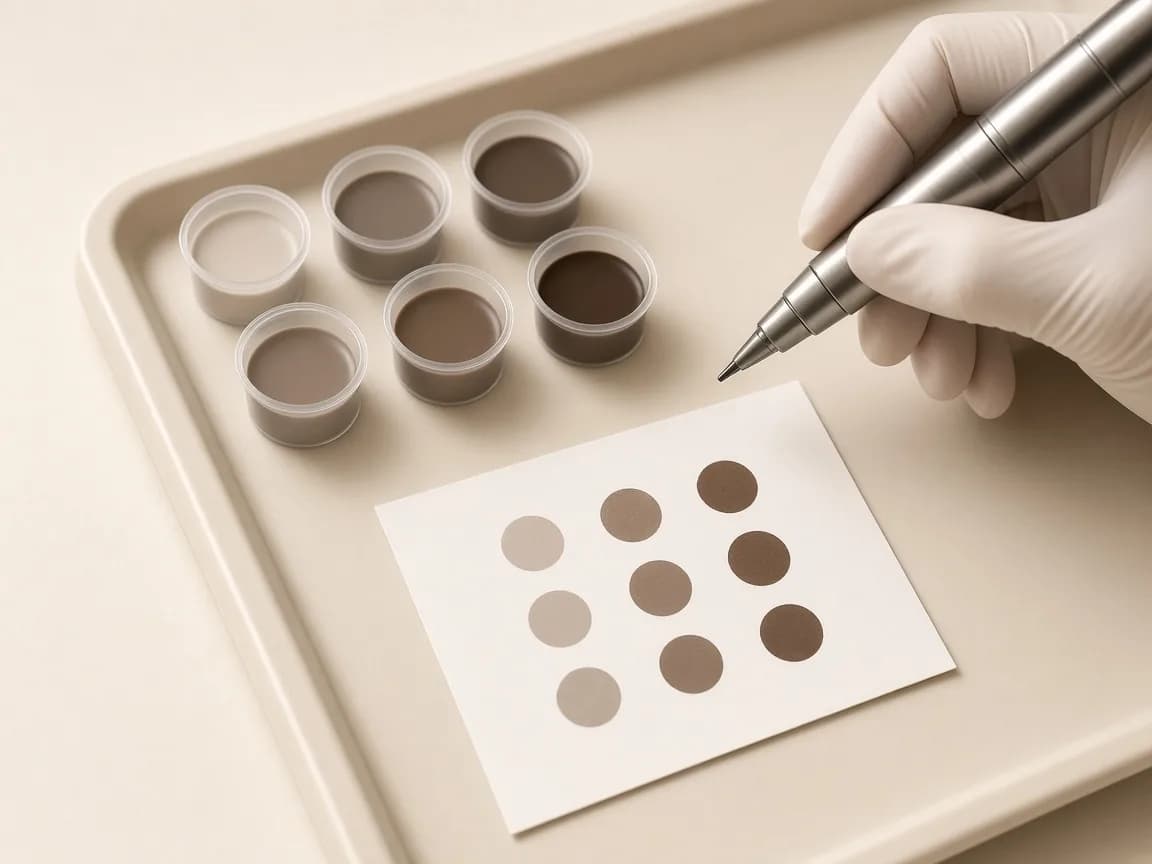
Skin camouflage pigment works on that colour difference. We implant a pigment matched to your surrounding skin tone into the upper layer of the scar, so it reads as part of the skin again instead of a pale or pink line.
Scars That Usually Respond Well
- Flat surgical scars (C-section, breast surgery, abdominoplasty, thyroid, facelift)
- Pale, well-healed accident and trauma scars
- Small lip and cleft-lip scars
- Older stretch marks that have turned white or silver
- Light skin grafts and flat burn areas, after assessment
Where Pigment Reaches Its Limit
Pigment changes colour, not texture. A deep, pitted acne scar casts a shadow because of its shape; colouring it does not lift the skin. A raised or keloid scar needs medical treatment first and is often not suitable at all. We tell you at intake when a dermatologist, laser or filler is the better first step.
Skin that changes colour a lot through the year is harder to match. Pigment does not tan with you, so we match to the shade you spend most of the year in and test on a small area first.
How a Treatment Runs
Every face or body scar starts with a test patch. After four to six weeks we judge how the scar took the pigment and how the shade healed, and only then treat the full scar. Most scars need two to three sessions, spaced four to eight weeks apart, because scar tissue takes pigment less evenly than normal skin.
Expect redness for one to three days. The shade looks stronger straight after a session and softens over the following weeks.
What a Realistic Result Looks Like
The goal is a scar you stop noticing at conversation distance and in daylight. It is not skin that looks as if the scar was never there. If you go in with that expectation, skin camouflage is one of the most rewarding treatments we do.