Female Pattern Hair Loss — The Ludwig Scale and What Works

Women lose hair differently from men: diffuse thinning rather than recession. The Ludwig scale, the medical work-up, and the realistic options.
Different from Male Pattern
Female androgenetic alopecia presents differently from the male equivalent. Hairlines almost always remain intact. Loss is diffuse — across the central scalp, the part line widens, the crown thins. The Christmas-tree pattern (wider at the front of the part, narrowing toward the back) is the visual signature.
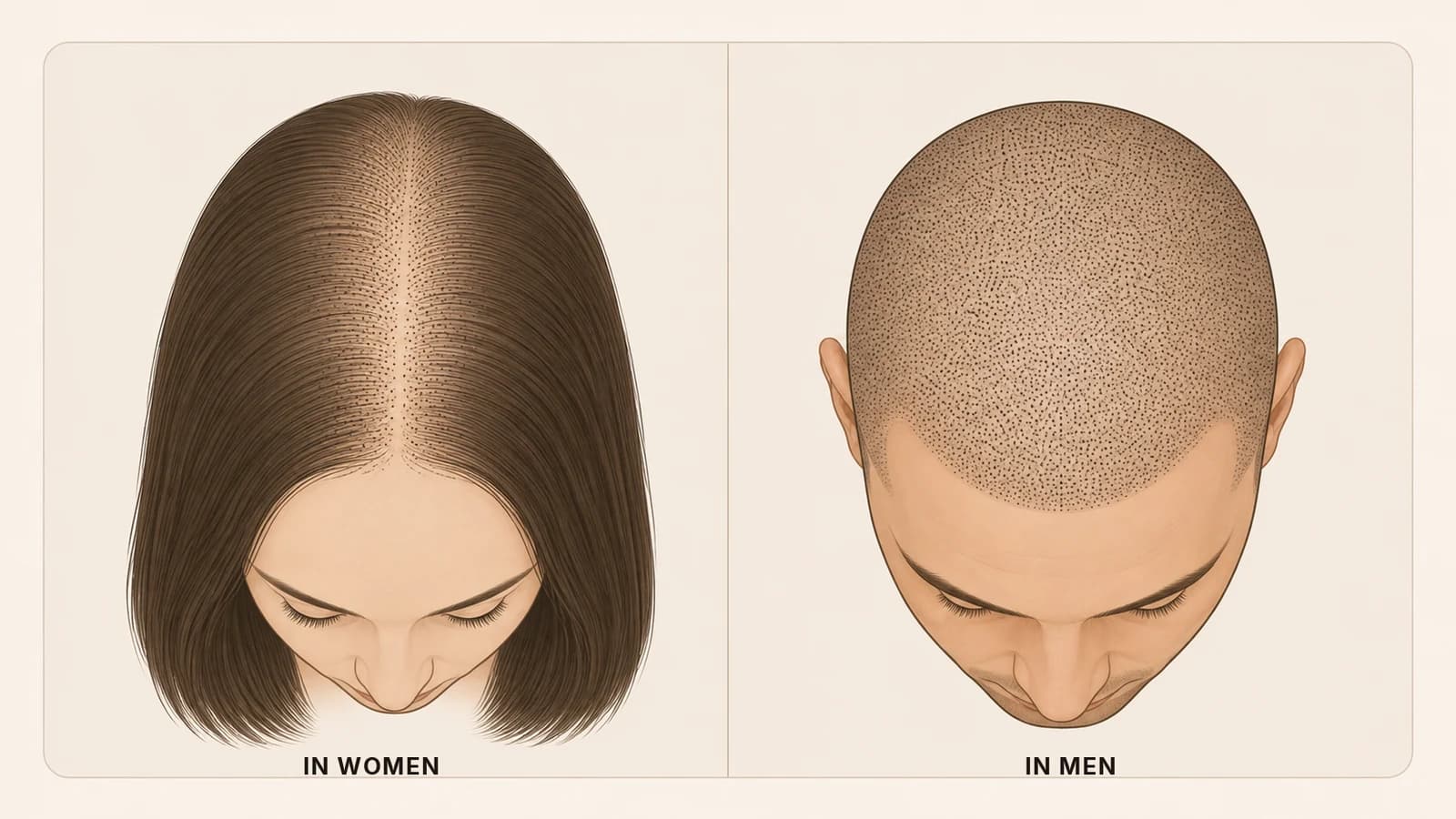
In women the hairline is left alone. The work sits in the part line and the central scalp.
The Ludwig Scale
The classification used most often is the Ludwig scale, with three stages:
- Ludwig I — modest thinning, mainly visible when the part is widened
- Ludwig II — clear thinning across the central scalp; full coverage still possible with styling
- Ludwig III — severe thinning with significant scalp visible through the hair
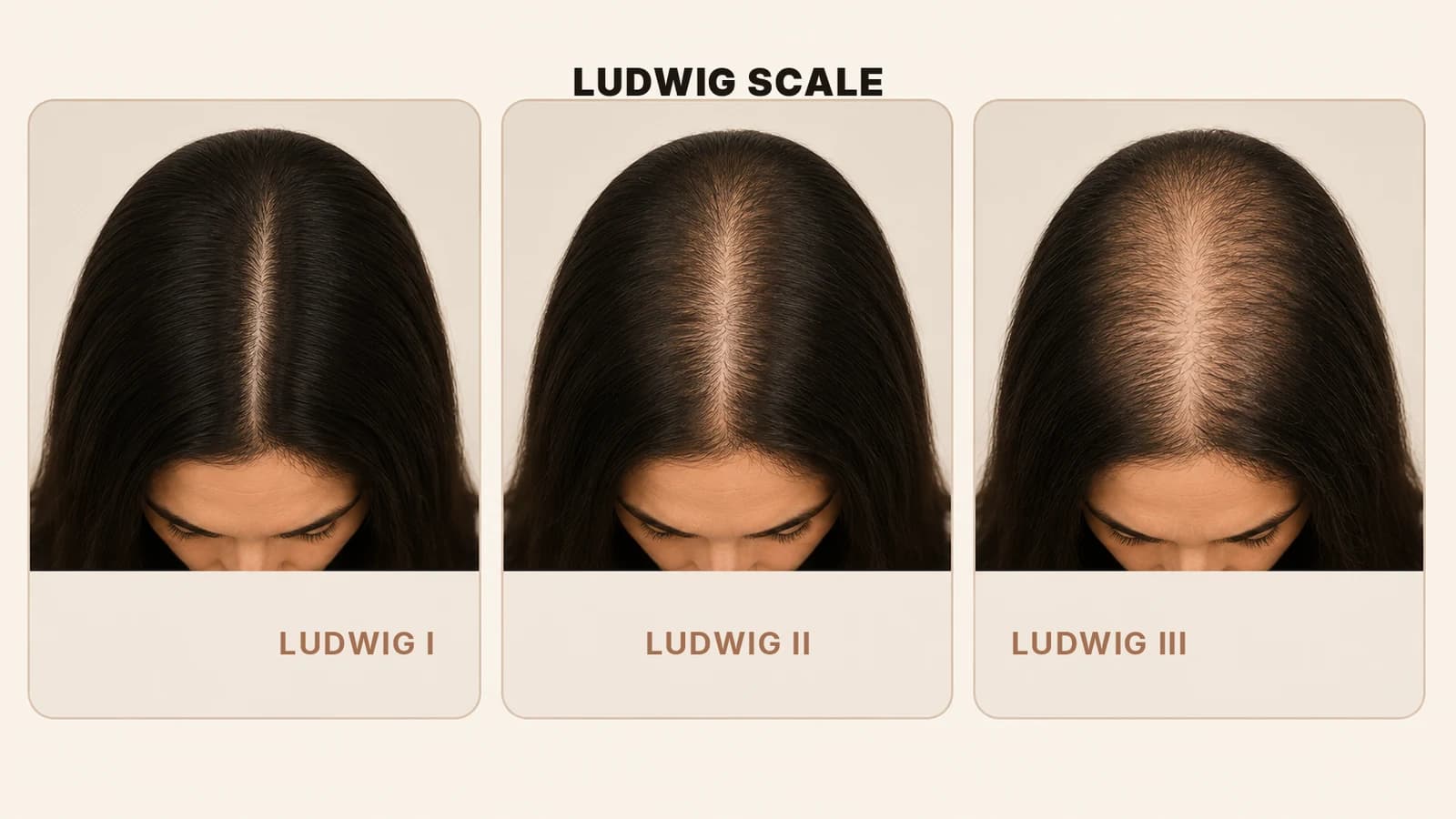
The Ludwig scale. The work sits in the part line and the central scalp, not in the hairline.
The Mandatory Bloodwork
Female-pattern hair loss often has hormonal or nutritional contributors. Before any treatment plan we recommend (and many GPs will order):
- Full thyroid panel (TSH, free T4, free T3, TPO antibodies)
- Ferritin (the storage form of iron — must be >50 ng/mL for healthy hair growth)
- Vitamin D, B12, zinc
- Hormonal panel: testosterone, DHEA-S, SHBG, prolactin
- PCOS screen if menstrual irregularity is present
What Works
Treatment options that have evidence in female pattern hair loss:
- Topical minoxidil (2% or 5%) — first-line, twice daily, stabilises and partially restores
- Spironolactone — anti-androgen, off-label for FPHL, monitored by GP
- Low-level laser therapy (LLLT) — modest but real benefit at 6+ months
- Hair transplant — most effective in stable FPHL with good donor density
- SMP for density — fills the visual scalp-show without surgery