Week-by-Week: What Hair Transplant Recovery Actually Feels Like
From day-one scabbing to the month-four shock-loss anxiety — an honest timeline of what to expect before the 12-month finish line.
The Recovery Timeline Most People Don’t Expect
Transplant surgery itself lasts 6–8 hours. The recovery spans 12–18 months. Understanding what each phase actually looks like — including the parts that feel like the transplant "isn’t working" — is the single biggest factor in staying calm and getting a great result.
Days 0–2: Scabbing and Plasma
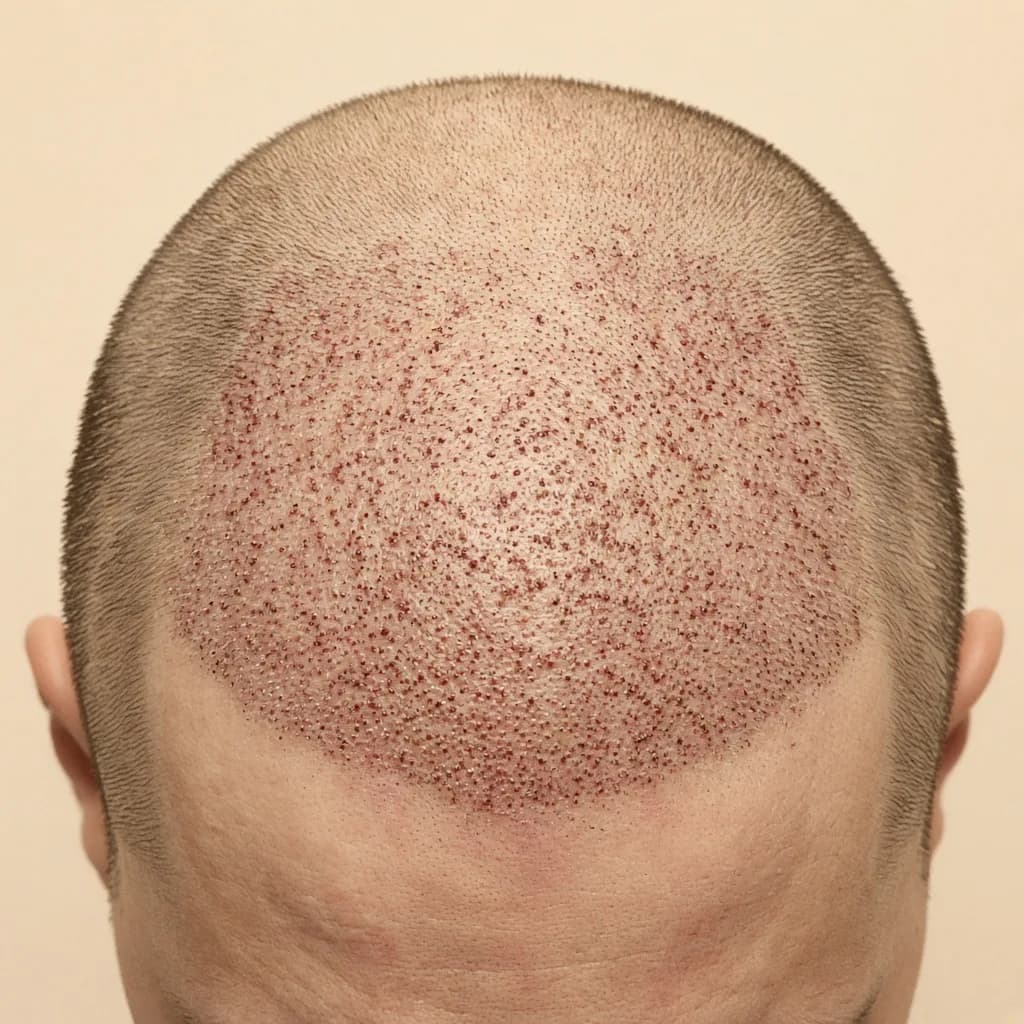
Immediately after the procedure, small crusts form around each implanted graft. You may see pinpoint bleeding and clear plasma discharge during the first night. Sleep semi-upright on the supplied neck pillow to control swelling.
- Do not touch the recipient area, even lightly.
- Sleep on your back with the pillow under your neck, not your head.
- Expect mild soreness at the donor area — manage with the prescribed pain medication.
Days 3–7: The Swelling Peak
Swelling of the forehead and occasionally the eyes typically peaks between days 3 and 5. This is normal and comes from fluid tracking downward from the surgical site. It resolves on its own within a week.
- Cool compresses on the forehead (never on the grafts) help.
- Keep your head above your heart when resting.
- Most patients are comfortable returning to desk work by day 7.
Weeks 2–4: Shock Loss
Around week 2–4, most of the transplanted hairs fall out. This is called telogen shock and it is completely expected. The follicle is still there — only the existing hair shaft sheds. You may also see some thinning of the surrounding native hair (co-shedding), which recovers.
This phase feels the worst psychologically. The scalp can look thinner than before surgery. Trust the process.
Months 3–4: The Thin Baby-Hair Phase
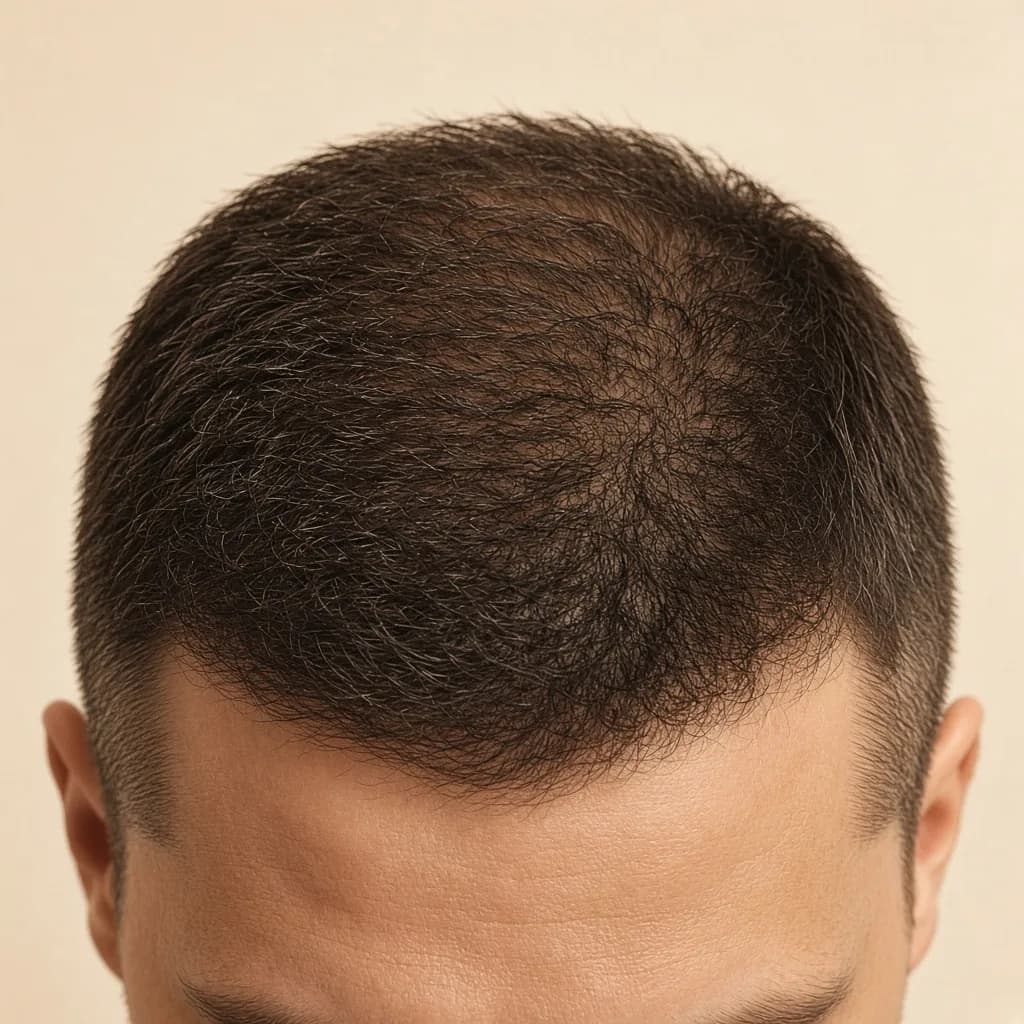
New hair starts to emerge around month 3. At first it is thin, wispy, and lighter than your natural colour — this is completely normal. It will thicken and darken over the following months.
This is the second anxiety plateau. Many people think the transplant failed because the new hair doesn’t yet look dense. It will.
Months 6–12: Density Builds
By month 6 you will see roughly 60–70% of the final result. Hair texture matures, colour deepens, and you can start styling normally. Monthly photos from a consistent angle under consistent lighting are the best way to see progress.
Months 12–18: The Final Result
The final density and texture lock in between 12 and 18 months. This is the point where you should judge the outcome, not before. If you are still unhappy at 18 months, that is the time to discuss a top-up, not at month 4.