Scar Camouflage · BE & NL
Scars, quietly blended in.
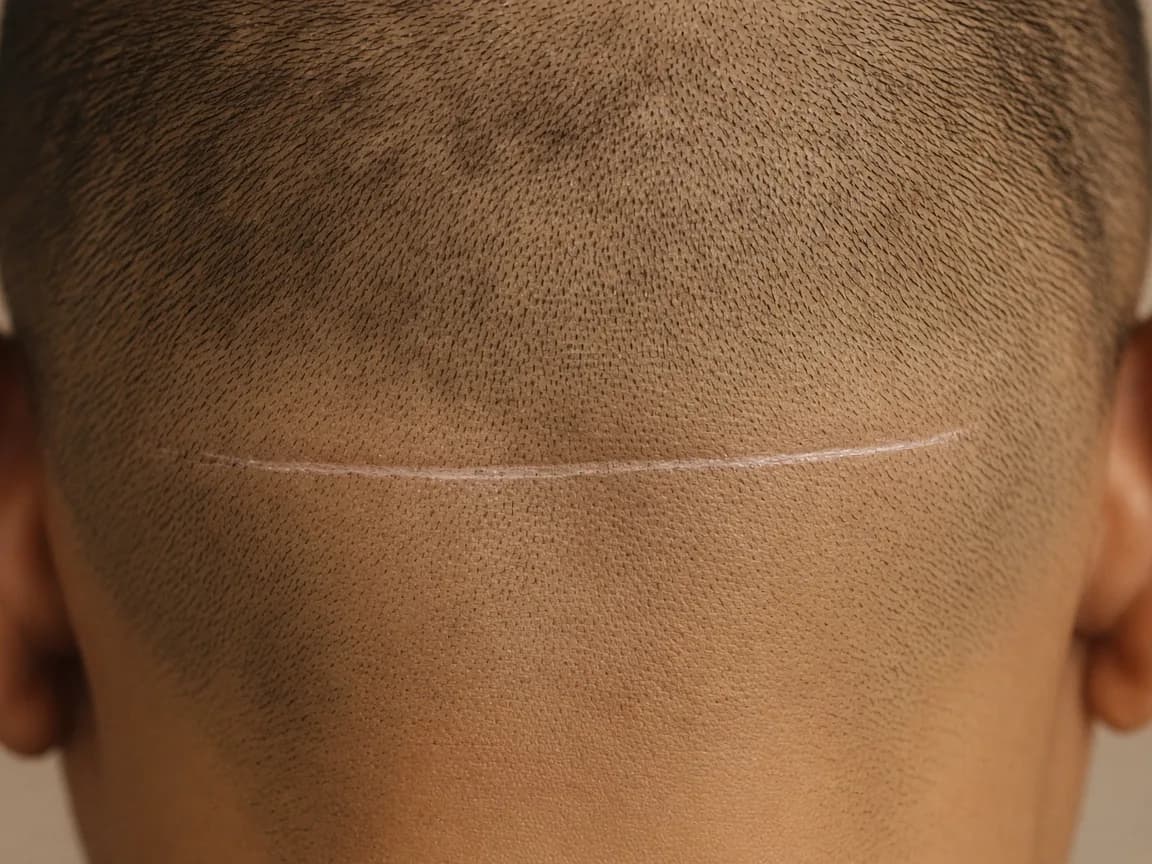
A scar is skin that healed without follicles or without its original colour. We put that missing colour back with precisely matched pigment, so a transplant scar, an old injury or a surgical line stops catching the eye. Its own treatment, its own specialists, its own plan.
- Sessions
- 2–3
- Downtime
- None
- Scar age
- 12+ months
- From
- €490
What we treat
Four kinds of scars. One careful method.
Every scar is different in colour, texture and age. Choose yours to see how we approach it, what is realistic and what it costs.
How camouflage works
Colour, restraint, patience.
Camouflage does not erase a scar. It removes the contrast that makes the eye stop on it. Three principles decide whether that looks natural.
01
Match the skin, not the scar
We match pigment to the healthy skin or hair around the scar, in daylight, and test it before treating the full area.
02
Less pigment, placed well
Scar tissue takes pigment unevenly. Too much turns into a dark patch. We build up slowly and stop when the scar disappears at normal distance.
03
Time between sessions
Sessions are 3–8 weeks apart, so each layer can settle before we decide what the next one needs.
Is your scar ready?
When to start, and when to wait
Starting too early is the most common reason camouflage disappoints. These are the checks we do at every intake.
Ready when
- The scar is at least 12 months old
- It has faded from pink or red to its final shade
- It is flat or only slightly raised
- The skin around it is calm, with no infection or eczema
Wait or see a doctor first when
- The scar is still red, growing or itchy
- It is a raised keloid or hypertrophic scar
- An underlying condition such as scarring alopecia is still active
- You expect the scar to disappear completely, including its texture
The process
From assessment to blended scar
Most scars need two or three short sessions. Everything happens at our clinic in Antwerpen.
- 1
Free scar assessment
30 minWe look at the scar in daylight, photograph it, and tell you honestly what is realistic, how many sessions it needs and what it costs.
- 2
Colour match and test
Session 1We match pigment to your skin or hair and treat a test area or a first light layer. On the face and body we always start with a test patch.
- 3
Build-up sessions
3–8 weeks apartEach session adds only what the scar still needs. Scar tissue settles slowly, so we never rush the next layer.
- 4
Final review
6 weeks afterWe judge the healed result in daylight, compare photos and plan any small refinement. Six months of follow-up is included.
Scar camouflage · sun & tanning
What happens to scar camouflage when you get a tan?
One of the most common questions we hear. A shaved scalp sees more sun than almost any other skin, so the plan has to hold up in July, not just on the day you leave the studio.
01 · The concern
Summer is the real test of scar camouflage
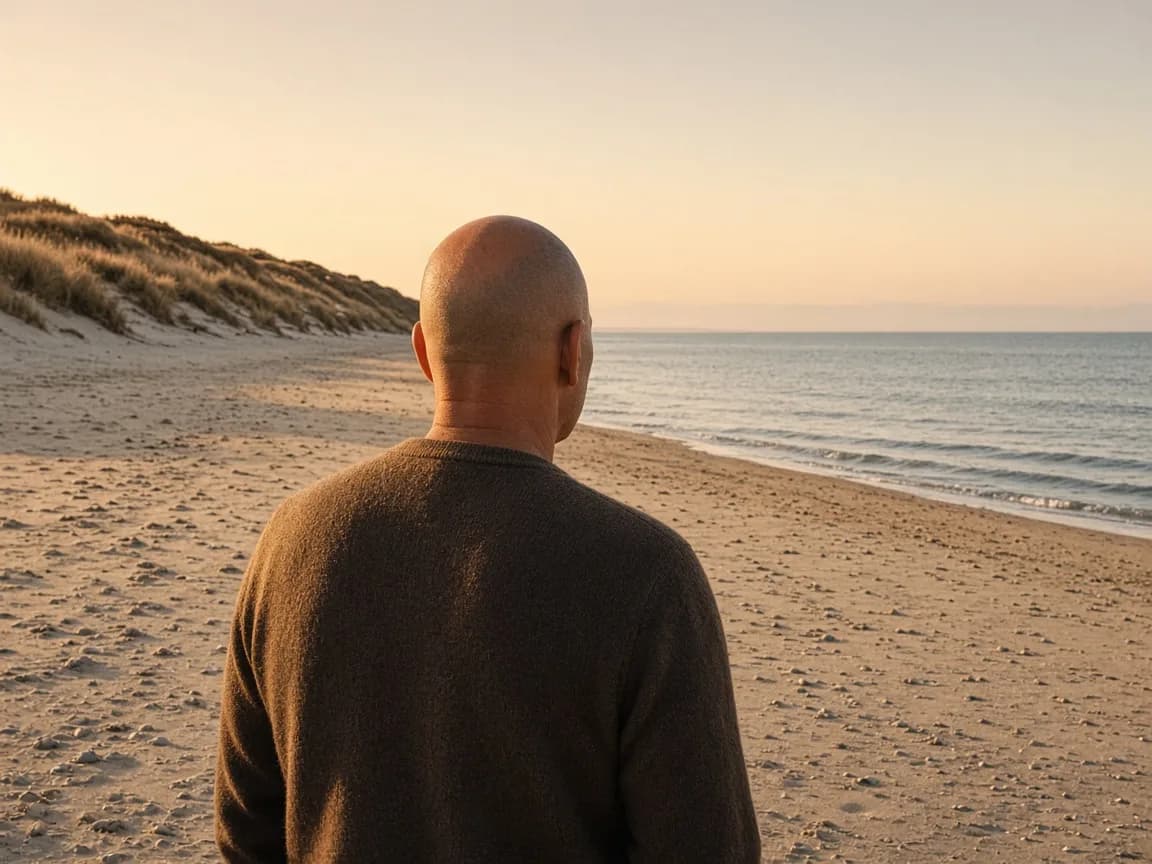
Belgian and Dutch summers, beach holidays, cycling, padel on an open court: a shaved or buzzed scalp takes direct sun for months. Clients reasonably ask whether their camouflage will still look natural once the skin around it darkens.
- The scalp, especially the crown and the back of the head, is one of the most sun-exposed areas of the body
- Camouflage has to be judged healed and in summer light, not only right after a session
- A good plan accounts for how your skin tans before the first dot goes in
We don't design for how it looks today. We design for how it looks healed, tanned and years later.
Will my scar camouflage change colour when I tan?
The pigment itself does not tan, but when it is placed at the right depth and saturation it keeps reading as follicles rather than as a patch. Sun exposure mainly softens pigment slowly over years, which SPF and an occasional top-up manage.
Why does my scalp scar look worse in summer?
Scar tissue often doesn't tan and has no follicles, so as the scalp around it darkens the pale line becomes more contrasted. Camouflage adds the missing follicle shadow so the scar blends into the surrounding scalp.
Can I go in the sun after scalp scar camouflage?
Avoid direct sun on the treated area while it heals after each session. After that you can enjoy the sun normally. Use SPF 30+ on the scalp and a hat on long days outdoors to keep the result looking fresh for longer.
Frequently asked
Scar camouflage, honestly
Will my scar disappear completely?
No, and we will not promise that. The goal is a scar you stop noticing at normal distance. Colour contrast can almost disappear; texture can still show in harsh, direct light.
Does it hurt?
Less than most people expect. Scar tissue often has reduced feeling. We use a numbing cream where needed.
How long does it last?
Pigment softens slowly over several years, faster with a lot of sun. A short refresh session restores the match.
What does it cost?
From €490 to €990 per session, depending on the size and type of scar. You get a written quote after the free assessment.
My scar is from a transplant abroad. Can you still help?
Yes. Where the procedure was done does not matter; the type, width and age of the scar do.
Guides
Scar camouflage guides
Start with a free scar assessment.
No cost and no obligation. We look at your scar, explain what is realistic and give you a written plan.