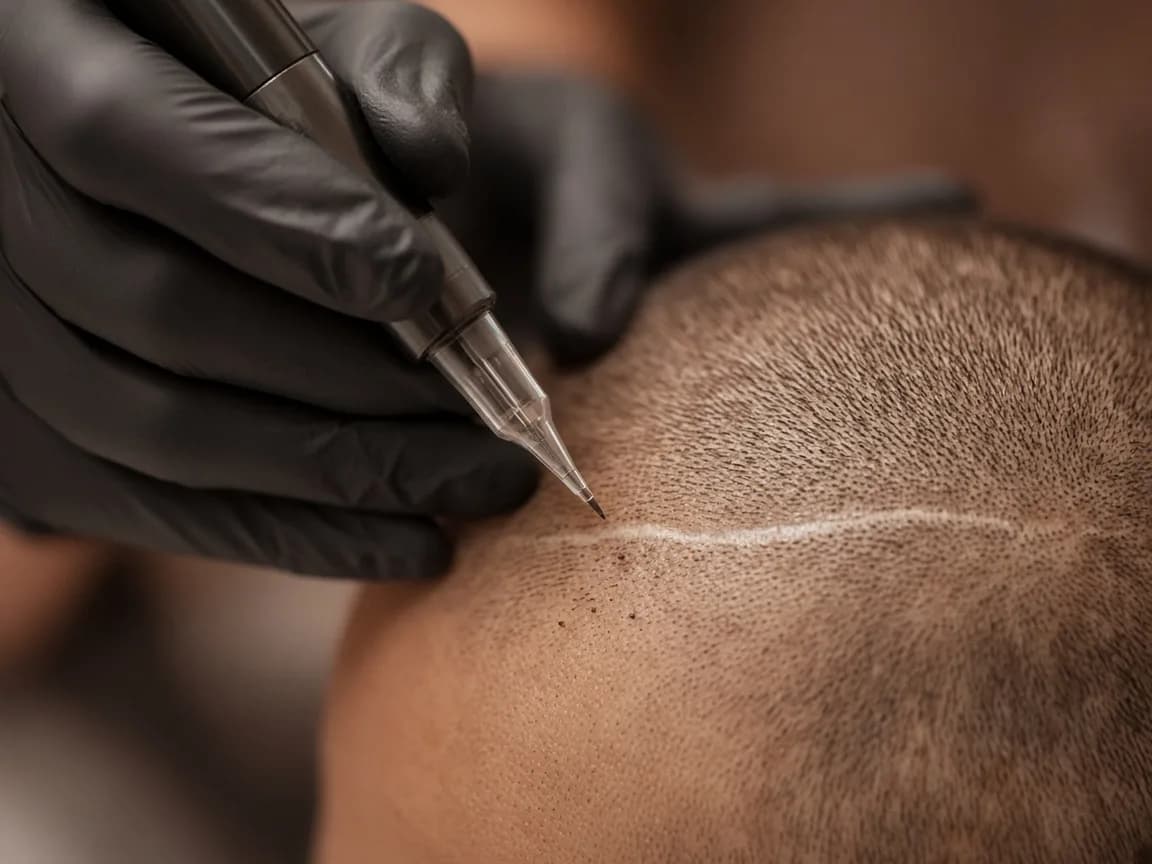
Scalp Scars
Scars from surgery, accidents, burns or injuries on the scalp — camouflaged with a follicle pattern matched to your own hair.
Sessions
2–3 sessions
Session length
60–120 min
Spacing
3–4 weeks apart
Downtime
None
Final result
6–8 weeks
Min. scar age
12 months
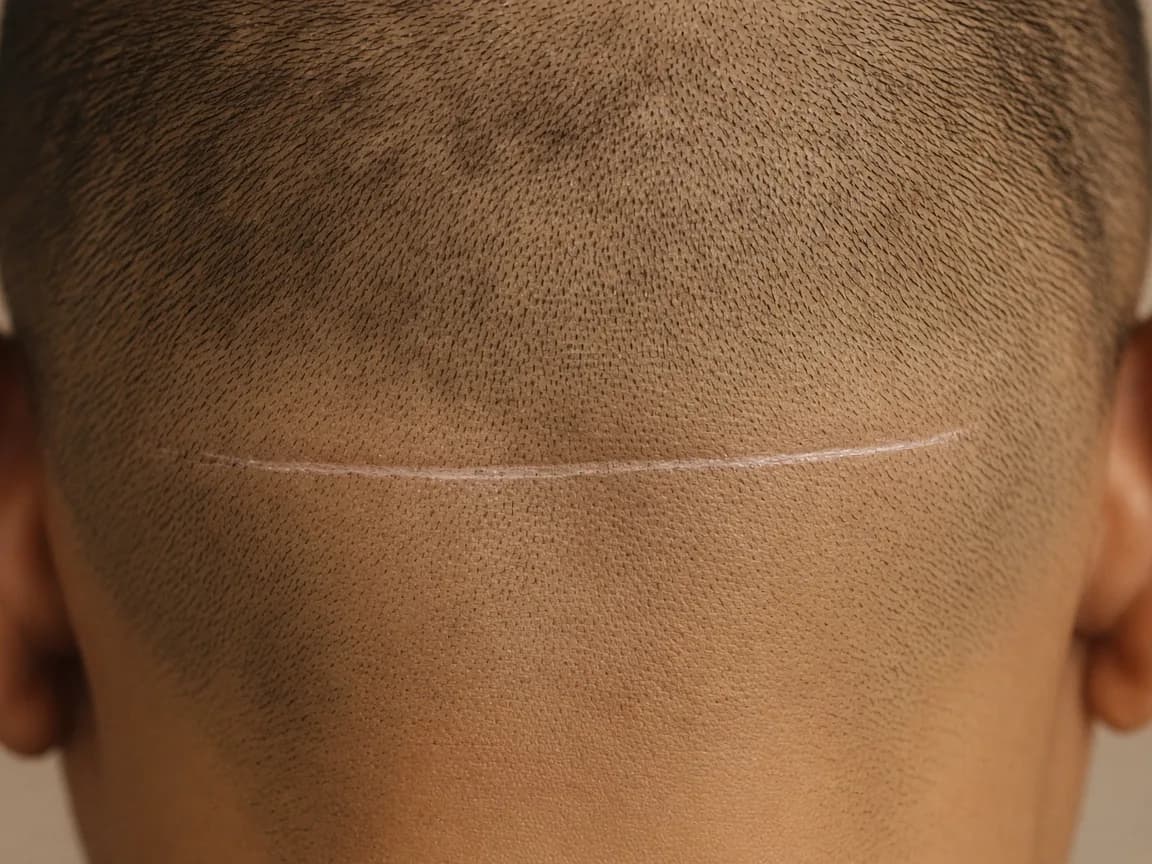
Scars on the scalp come from many places: brain or skull surgery, a fall or accident as a child, a dog bite, a burn, the removal of a mole or cyst. Whatever the cause, the result is the same — a patch or line where no hair grows, which stands out the shorter you wear your hair.
We camouflage these scars by placing pigment dots that copy your surrounding follicles, so the scar reads as part of your hair instead of a gap in it.
Scalp scars we treat
- Neurosurgery and skull-surgery scars
- Accident and injury scars, including old childhood scars
- Burn scars on the scalp
- Scars after mole, cyst or skin-cancer removal (once fully healed and cleared by your doctor)
- Patches left by scarring alopecia that has been stable for at least a year
Every scar behaves differently
A thin surgical line takes pigment very differently from a burn scar or a stretched, shiny patch. Burn scars in particular can have uneven texture and absorb pigment unpredictably.
That is why we start conservatively, let each session settle, and adjust. The aim is a scar that blends in at your normal haircut. Strongly textured scars improve a lot, but texture may remain visible under direct light.
When your scar is ready
- At least 12 months old and fully healed
- No longer pink or red
- Flat or only slightly raised
- Cleared by your doctor after surgery or skin-cancer treatment
The treatment plan
Two or three short sessions, 3–4 weeks apart, so the scar tissue can settle between them. We photograph the scar under the same light before and after every session, so you can see the change for yourself.
Suitability
Is this the right procedure for you?
Best for
- Surgical scars on the scalp
- Accident and injury scars
- Mature, flat burn scars
- Stable scarring-alopecia patches
Not the right fit when
- Scars younger than 12 months
- Keloid or strongly raised scars without prior assessment
- Scalp conditions that are still active
The package
What is included
The figure you sign at intake covers everything below. No itemised invoices, no surprise add-ons.
Frequently asked
Honest answers
I have a large scar from brain surgery. Is that possible?
Often, yes. Large surgical scars are a common reason people come to us. We assess the size, texture and age of the scar in person and only plan treatment once your surgeon is happy that the area has fully healed.
Can you treat burn scars?
Mature, flat burn scars can improve a lot. Thick or very uneven burn tissue takes pigment unpredictably, so we always start with a cautious first session and are honest about what is realistic.
Do I need to shave my head?
No. We match the camouflage to the hair length you want to wear. A scar is easiest to hide in very short or medium-short hair.
Continue reading
Related guides

Start with a free intake.
No cost. No obligation. We look at your scar in daylight, tell you what is realistic and give you a written plan.