Hair Transplant Scars
FUT strip scars and FUE dot scars, blended into the donor area so you can wear your hair short again.
Sessions
2–3 sessions
Session length
60–120 min
Spacing
3–4 weeks apart
Downtime
None
Final result
6–8 weeks
Min. scar age
12 months
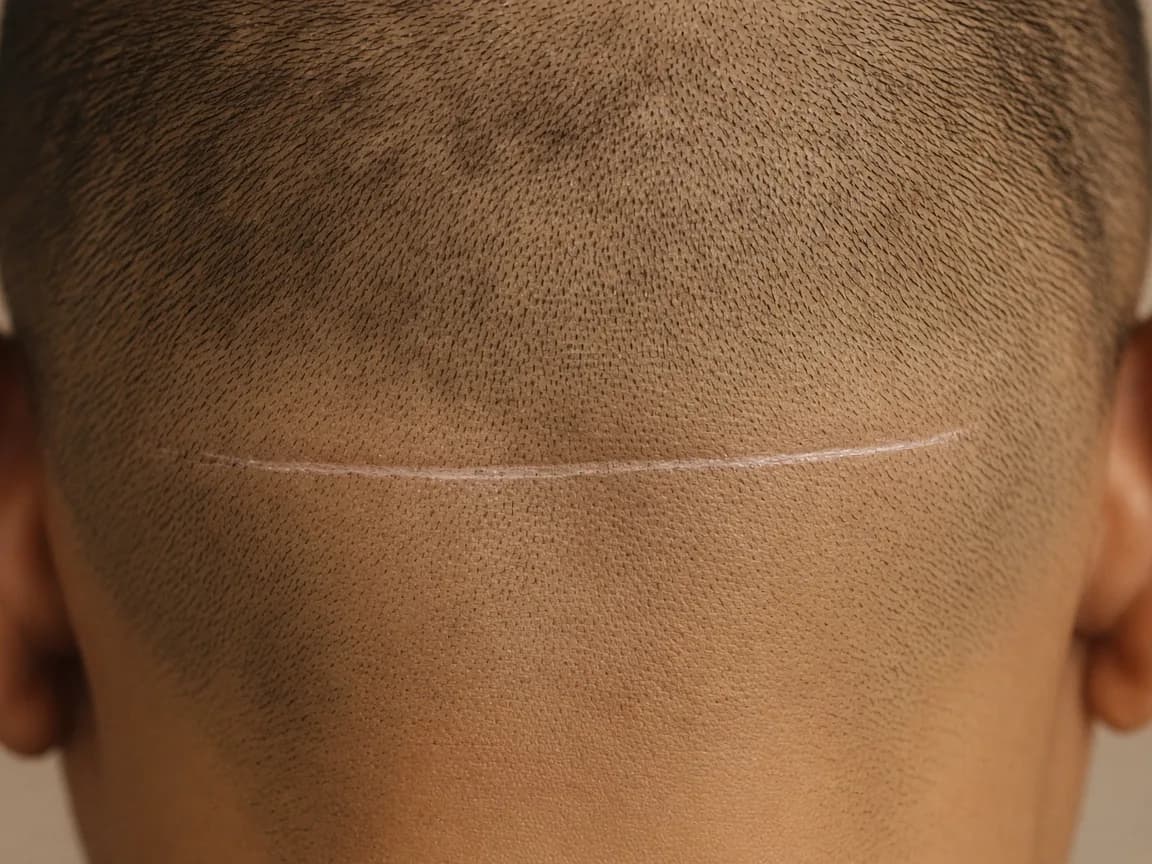
A transplant scar is skin that healed without follicles. With longer hair it hides; the moment you cut your hair short, the pale line or the pattern of white dots shows. Many people keep their hair longer than they want for years because of it.
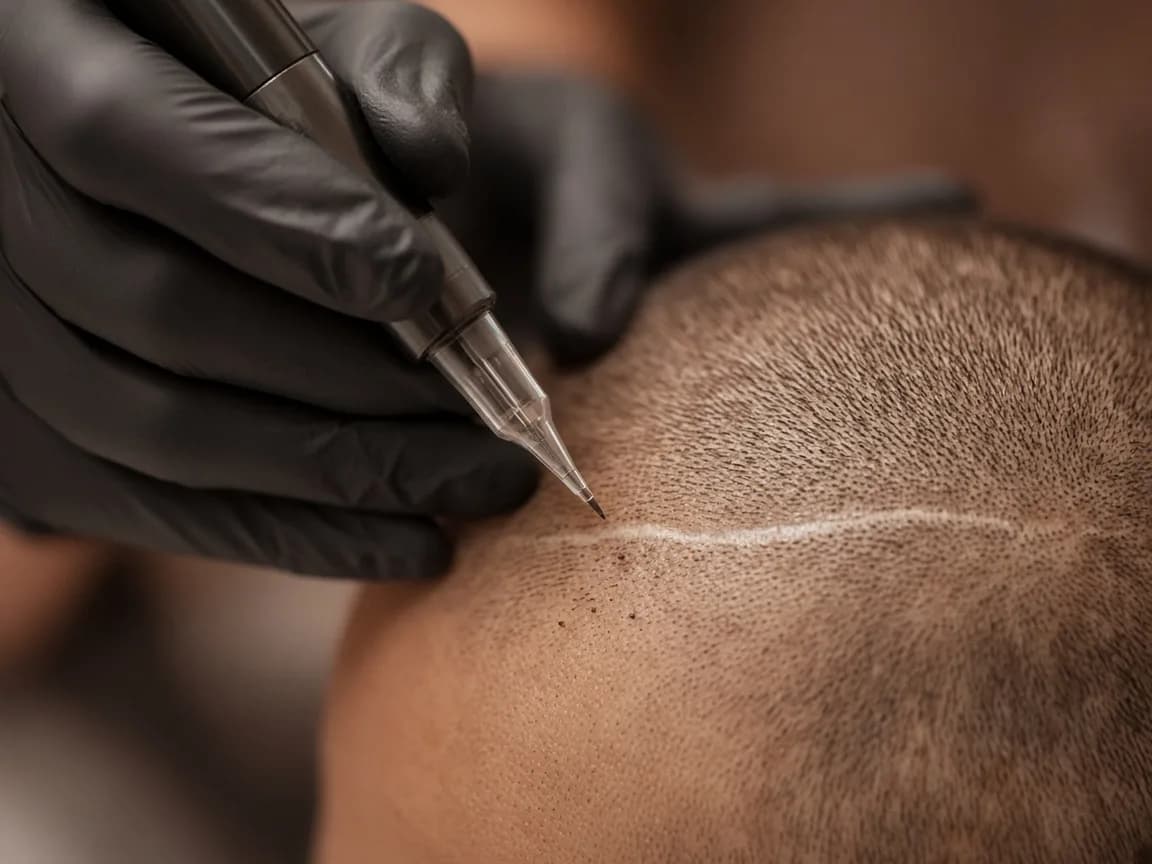
Scar camouflage puts the missing visual signal back. We place pigment dots in and around the scar that copy the size, colour and spacing of the follicles next to it, so the scar blends into the donor area at a normal viewing distance.
FUT strip scars
The strip method leaves one linear scar across the back of the head, often 12–18 cm long and anywhere from a few millimetres to over a centimetre wide. Because it is pale and continuous, it catches the eye as soon as the hair around it is short.
We break up that line: pigment is placed along and across the scar, and feathered into the hair on both sides, so the eye no longer finds a clean edge.
FUE dot scars
FUE leaves hundreds to thousands of small round scars, usually 0.7–1.0 mm each. Spread evenly they are hard to see; over-harvested areas look thin, moth-eaten or white when shaved.
Each dot scar is softened individually, and over-harvested zones get extra density so the donor area looks even again.
How scar tissue takes pigment
Scar tissue does not hold pigment the way healthy skin does. A first session in scar tissue may retain only 30–50% of what normal skin would. That is expected, which is why we build up in two or three sessions and only add what is needed after each one has settled.
The honest goal is a scar you stop noticing at your preferred haircut — not skin that looks as if it was never operated on. Texture can still show under direct, harsh light.
When your scar is ready
- At least 12 months after the transplant
- The scar is no longer pink or red
- Flat or only slightly raised
- No inflammation, infection or open spots
Suitability
Is this the right procedure for you?
Best for
- Linear FUT strip scars
- Visible FUE dot scars after shaving
- Over-harvested, thin-looking donor areas
- People who want to wear their hair short again
Not the right fit when
- Scars younger than 12 months
- Keloid or strongly raised scars without prior assessment
- Active inflammation in the donor area
The package
What is included
The figure you sign at intake covers everything below. No itemised invoices, no surprise add-ons.
Frequently asked
Honest answers
Will my FUT scar become completely invisible?
A flat, pale strip scar often becomes very hard to spot at a short haircut. A wide or textured scar becomes far less obvious but may still show texture under harsh light. We show you what to expect at the assessment, before anything is booked.
My transplant was done abroad. Can you still treat the scar?
Yes. Where the transplant was done does not matter — the type, width and age of the scar do. Bring any details you have from the clinic.
Why does it take more than one session?
Scar tissue absorbs pigment unpredictably. Working in layers lets us see what stayed after each session and reinforce only the spots that need it, instead of over-pigmenting in one go.
Will I need a refresh later?
Pigment softens slowly over the years. Most people come back for a short refresh after roughly 5–8 years.
Continue reading
Related guides

Start with a free intake.
No cost. No obligation. We look at your scar in daylight, tell you what is realistic and give you a written plan.