V Hair Rx — How FGF-9, FGF-5s and Noggin Work on the Hair Cycle
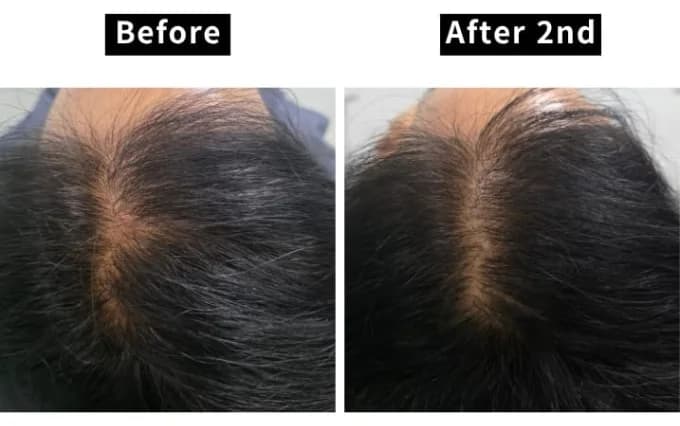
Three growth-factor ingredients that each target a different stage of the hair cycle, with before and after photos from two of our clients.
A Different Approach to Thinning Hair
For these clients we used V Hair Rx, a scalp formula built around three active ingredients: FGF-9, FGF-5s and Noggin. Each one acts on a different stage of the hair growth cycle. That is a different route from PRP or exosomes, which supply a broad mix of growth signals rather than targeting specific steps in the cycle.
This combination is fairly common in Korean hair-loss injectables and topicals. Below we explain what each ingredient is reported to do, then show what we saw in two of our clients.
The Hair Cycle in One Minute
Every follicle moves through three phases. Anagen is the growth phase. Catagen is a short regression phase in which the follicle shrinks. Telogen is the resting phase, after which the hair sheds and the cycle starts again. In pattern hair loss, follicles spend less time growing and more time resting, so the hair becomes thinner and sparser.
Three Ingredients, Three Jobs
- Noggin is a BMP (bone morphogenetic protein) antagonist. BMP signalling keeps follicles in the resting (telogen) phase, so blocking it with Noggin helps push follicles into anagen.
- FGF-5s, the short isoform of FGF-5, acts as a competitive antagonist to full-length FGF-5. Full-length FGF-5 normally signals the hair to leave the growth phase and enter regression (catagen). By blocking that signal, FGF-5s helps prolong the growth phase.
- FGF-9 (fibroblast growth factor 9) is reported to trigger new hair follicle formation by activating Wnt signalling in the surrounding dermis. Research has linked it to follicle neogenesis after injury.
Put Simply
Noggin moves follicles into the growth phase, FGF-5s keeps them there longer, and FGF-9 stimulates new follicle formation. Together they work on starting growth, sustaining it and adding to it.
What We Saw in Our Clients
Sessions were done at two-week intervals. The photos below are from two clients, taken before treatment and after the first and second sessions.
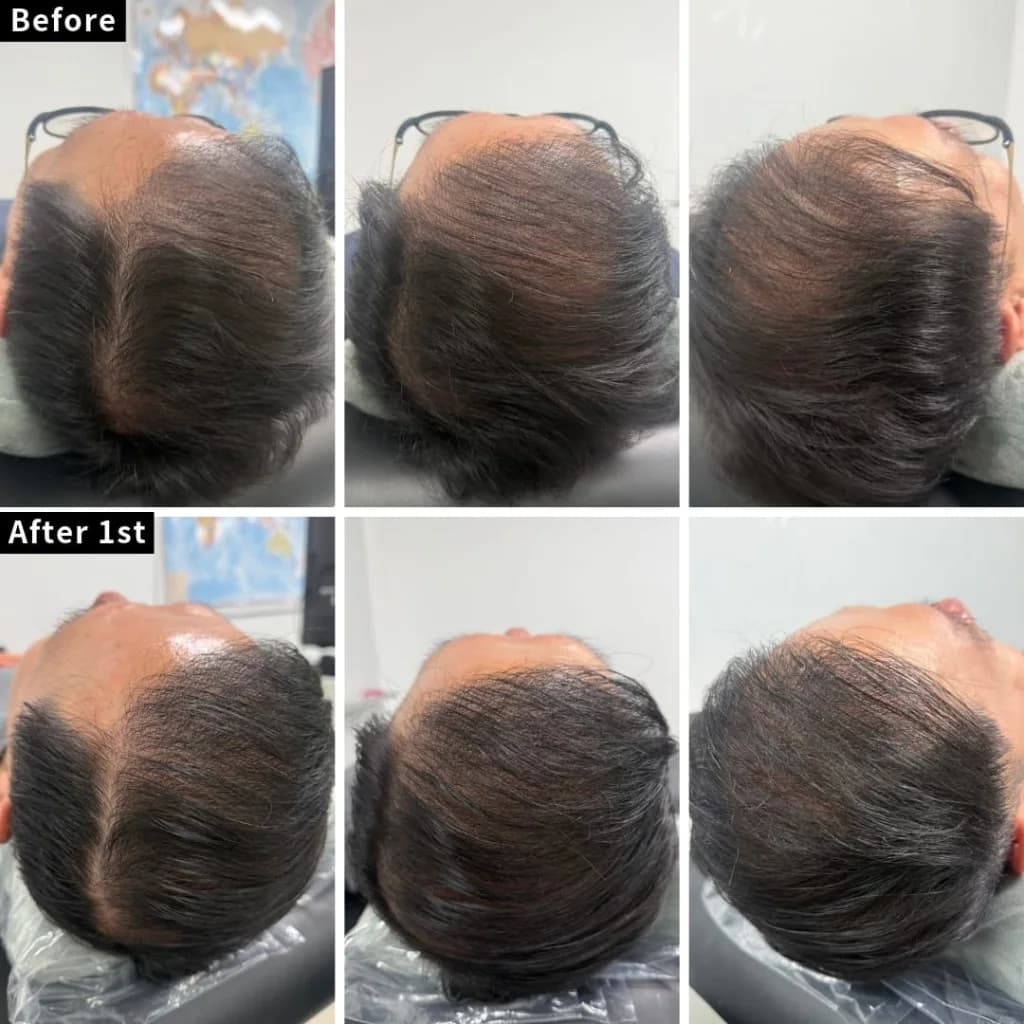
Client 1: before treatment (top) and after the first session (bottom).
Along the Part Line
In the second client we followed the central part line, where thinning in women and men often shows first.
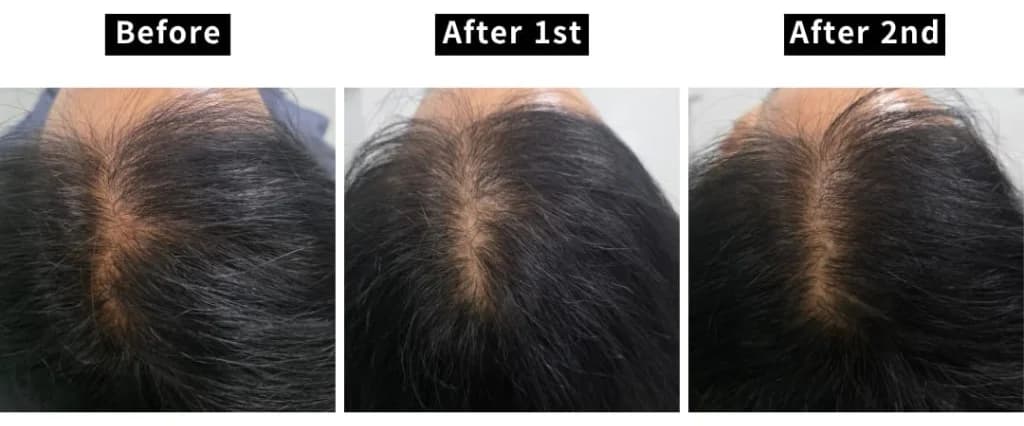
Client 2: before treatment, after the first session and after the second session.
An Honest Note on Photos
Results differ from person to person, and lighting, hair length and styling also change how dense hair looks in a photo. We assess every scalp in person before recommending a treatment, and we tell you honestly whether it is likely to help in your case.
Who It May Suit
A growth-factor approach makes most sense while there are still follicles to work with: early to moderate thinning, a widening part, or diffuse density loss. It cannot bring back follicles that are long gone. A medical check comes first if hair loss is sudden, patchy or painful.